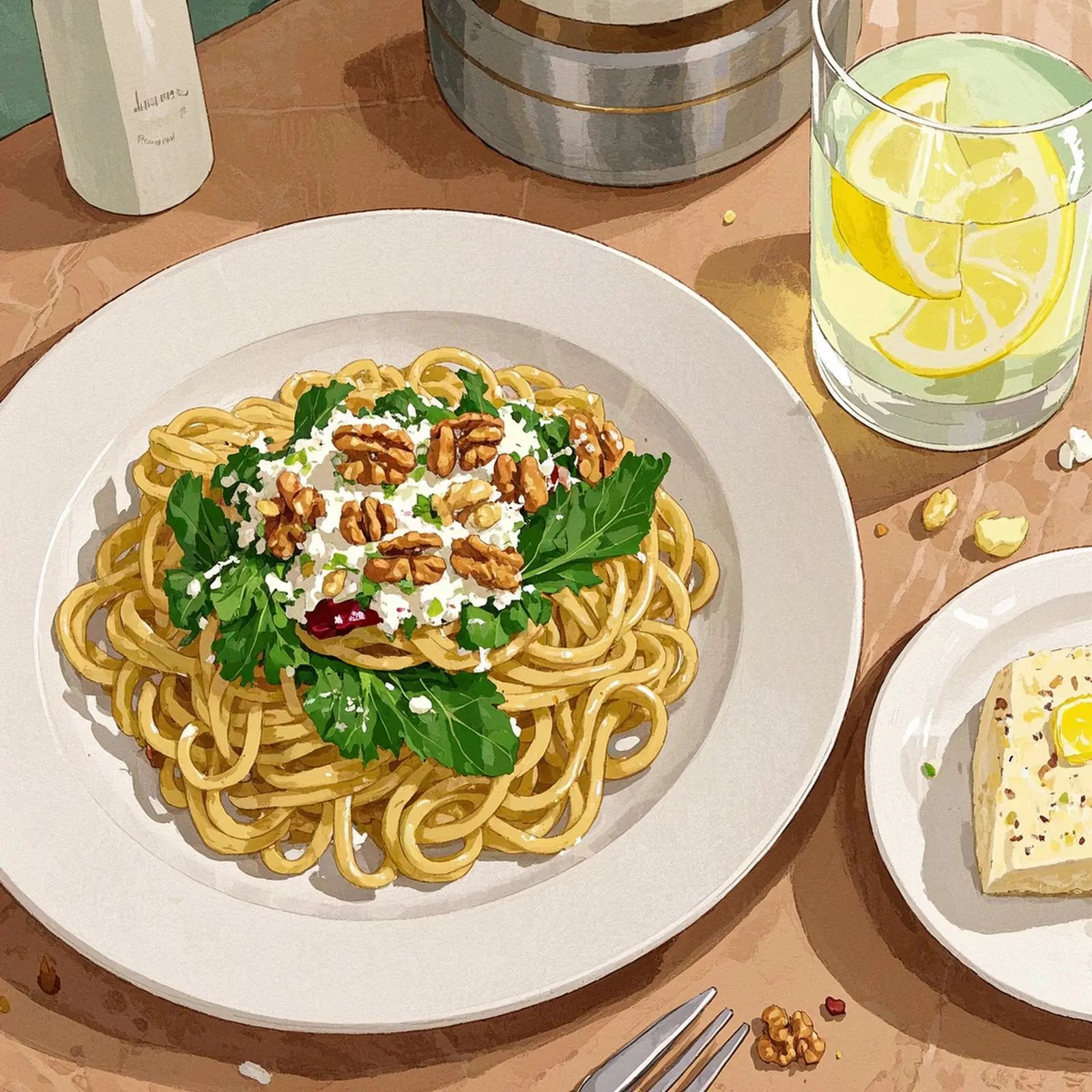
Whole-Wheat Pasta with Toasted Walnuts, Greens, and Ricotta
Share This Recipe

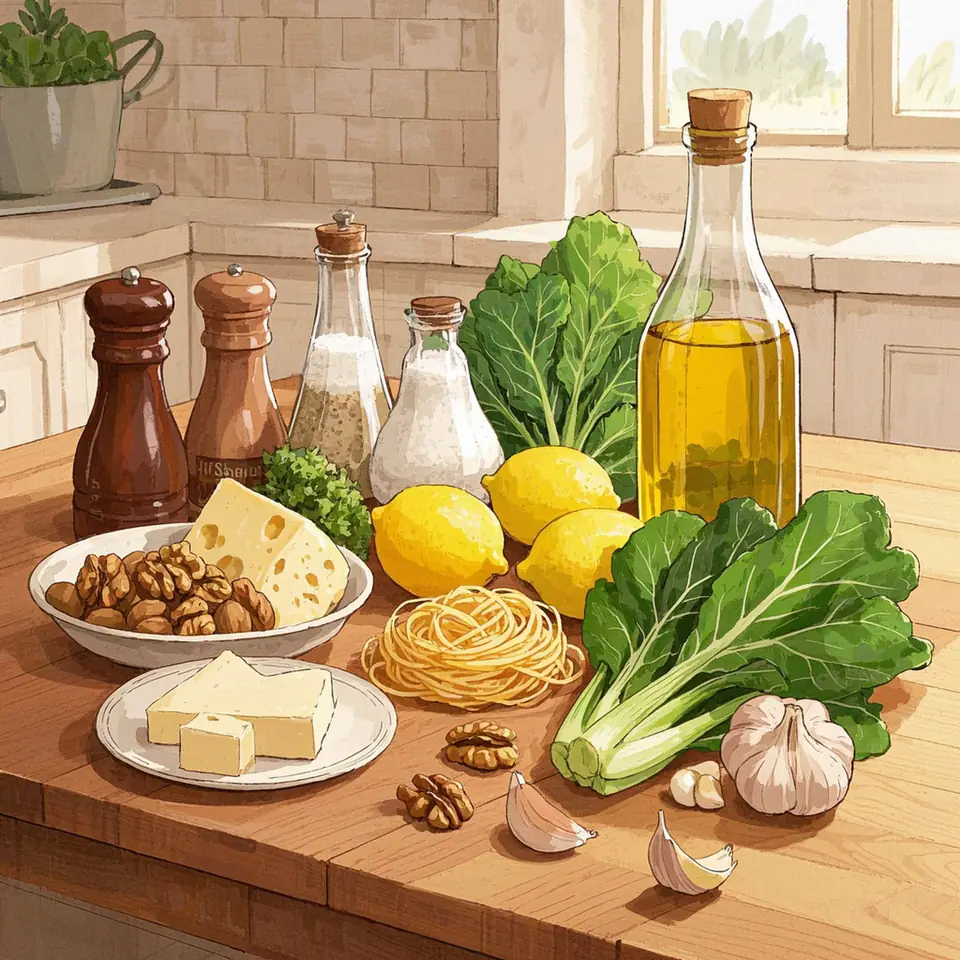
Ingredients

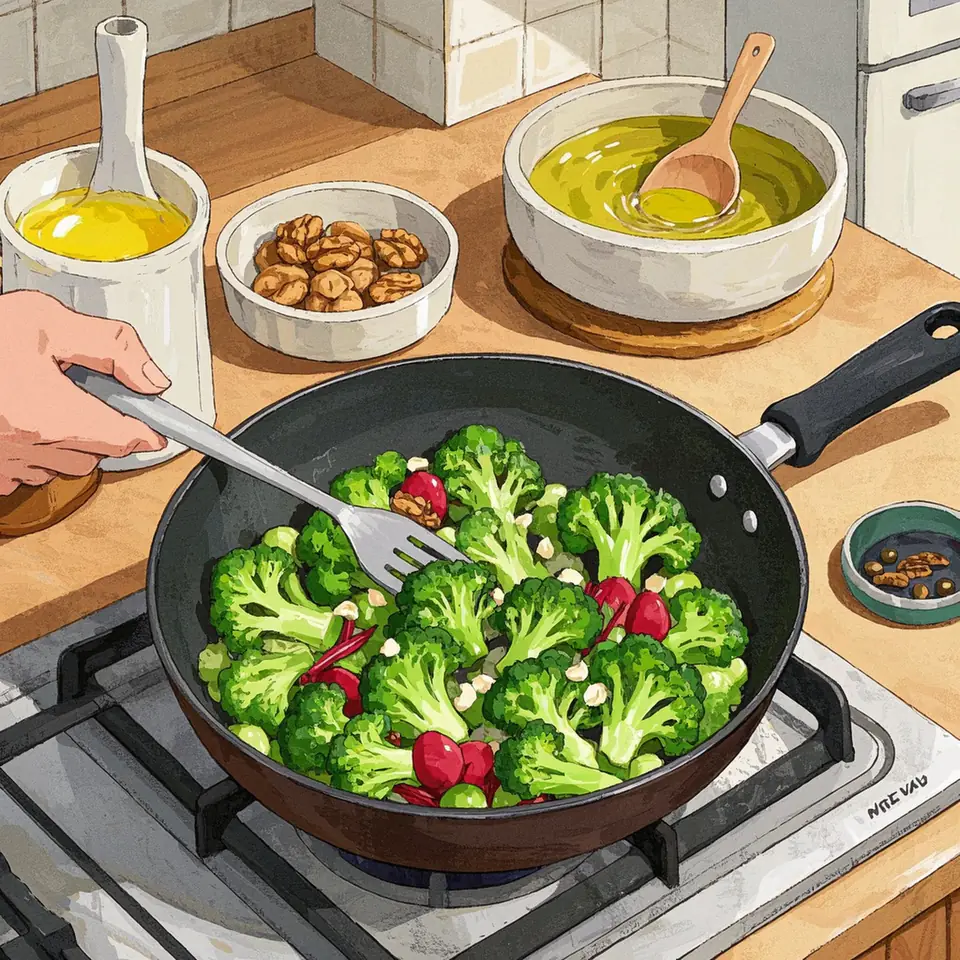
Cooking Process
Recipe Note
Flavor + context before you cook
""
Steps
Fill a large pot with salted water and bring it to a rolling boil over high heat. Once boiling, add the whole - wheat pasta and cook according to the package directions. A couple of minutes before the pasta is fully cooked, scoop out 1/2 cup of the cooking liquid and set it aside. Then, drain the pasta and return it to the now - empty pot. Drizzle some olive oil over the pasta and toss it gently until the pasta is evenly coated. If the pasta appears dry, gradually pour in some of the reserved cooking liquid. You may not need to use all of the cooking liquid.
While the pasta is cooking, place a large skillet on the stovetop and heat it over low heat. Pour 1/4 cup of olive oil into the skillet. Add the walnuts to the oil and sprinkle a little salt on them. Toast the walnuts for 3 - 5 minutes, stirring them occasionally with a spatula. Keep a close eye on them as they cook, as they can burn quickly. Toast the walnuts until they are lightly browned. Remember, they will continue to cook slightly once you remove them from the skillet. Once they reach the desired color, transfer the walnuts, along with the oil in the skillet, to a small bowl and set it aside.
After removing the walnuts, increase the heat of the now - empty skillet to medium. Pour 2 tablespoons of olive oil into the skillet. Working in batches, add the broccoli rabe and Swiss chard or kale to the skillet. As one batch of greens wilts down, add another batch. Season each batch with a pinch of salt and a light drizzle of olive oil. Cook the greens until they are just wilted and their color turns a bright green. Then, add the garlic to the skillet and cook it until it becomes fragrant, which should take about 1 minute. Once the garlic is fragrant, turn off the heat.
Take a small bowl and add the ricotta cheese and lemon zest to it. Use a fork or a small whisk to stir them together until well - combined. Sprinkle a little salt over the mixture and stir again to season it.
When it's time to serve, arrange the cooked pasta on serving plates or bowls. Place the bowl of walnuts, the skillet of greens, the bowl of ricotta, the lemon wedges, the black pepper, and the Parmesan cheese on the table. For each serving of pasta, top it with a portion of the greens, a spoonful of walnuts along with a drizzle of their oil, a dollop of ricotta, a squeeze of lemon juice from the lemon wedges, and as much black pepper and grated Parmesan as you like.
Nutrition
Per serving (2 servings)
225
Calories
9g
Protein
28g
Carbs
9g
Fat
175mg
Sodium
Quick Answers
Recipe at a glance
Recipe metadata
Base recipe yield
Estimated cook difficulty
Tag-based classification
Meal-type tag
Detected from ingredients + tags
Steps with timer guidance
Per base serving (if available)
FAQ
Recipe Questions
Show
FAQ
Recipe Questions
How many servings does this whole - wheat pasta recipe make?
This recipe makes 4 - 6 servings. It's suitable for a small family or gathering.
How long does it take to make this recipe?
The total time required is 30 minutes, with 15 minutes for prep and 15 minutes for cooking.
What are the allergens in this whole - wheat pasta recipe?
The allergens in this recipe are tree nuts, dairy, and wheat/gluten due to walnuts, ricotta, and whole - wheat pasta.
Can I substitute the Swiss chard or kale in this recipe?
The recipe allows using a combination of Swiss chard and kale, but no other substitution suggestions are provided.
How long should I toast the walnuts?
Toast the walnuts for 3 - 5 minutes over low heat, stirring occasionally, until lightly browned.
What's the difficulty level of this recipe?
The difficulty level of this recipe is medium, according to the provided data.
Substitutions
Show
Substitutions
whole - wheat pasta
spaghetti squash, zucchini noodles, brown rice pasta
Spaghetti squash has a lighter, more delicate texture compared to whole - wheat pasta and requires less cooking time. Zucchini noodles are raw and have a fresh, crisp texture. Brown rice pasta has a similar texture to whole - wheat pasta but may have a slightly nuttier flavor.
walnuts
almonds, pecans, sunflower seeds
Almonds and pecans have a similar texture to walnuts when toasted, but pecans are sweeter. Sunflower seeds are a good option for those with nut allergies, but they have a softer texture and a milder flavor.
broccoli rabe
broccoli, rapini, spinach
Broccoli has a denser texture and a milder flavor compared to broccoli rabe. Rapini is very similar to broccoli rabe in taste and texture. Spinach wilts faster and has a more tender texture.
Swiss chard or kale
collard greens, mustard greens, arugula
Collard greens are thicker and take longer to cook than Swiss chard or kale. Mustard greens have a peppery flavor. Arugula has a more delicate texture and a slightly bitter, peppery taste and can be used raw in this recipe.
garlic
shallots, onions
Shallots have a milder, sweeter flavor than garlic. Onions have a stronger flavor and a crunchier texture when cooked, and may require a bit more cooking time to become fragrant.
ricotta cheese
cottage cheese, Greek yogurt
Cottage cheese has a chunkier texture than ricotta. Greek yogurt is smoother and tangier. Both can be used as substitutes, but you may need to adjust the seasoning to taste.
Parmesan
Pecorino Romano, Asiago
Pecorino Romano is saltier and has a stronger flavor than Parmesan. Asiago has a milder, nuttier flavor and a softer texture when grated.
Storage & Reheating
Show
Storage & Reheating
Refrigerator
Store leftovers in an airtight container in the fridge for 3 - 4 days.
Freezer
The pasta can be frozen for up to 2 - 3 months. Separate the components (pasta, greens, walnuts, ricotta) in airtight containers or freezer bags before freezing.
Storage Tips
- • Keep the ricotta and greens separate from the pasta to maintain texture.
- • Store the walnuts in a sealed container to prevent them from going rancid.
Reheating Tips
- • For the pasta, add a splash of water or reserved cooking liquid and heat in the microwave in short intervals, stirring between each, to avoid drying.
- • Reheat the greens on the stovetop over low - medium heat, stirring frequently.
- • The ricotta can be served cold or gently warmed in the microwave, but be careful not to overheat as it may curdle.
- • Toast the walnuts again briefly in a dry skillet if they've lost their crunch.
Safety Notes
- • Always reheat leftovers to a safe internal temperature to prevent foodborne illness.
- • When thawing frozen components, do so in the refrigerator overnight.
Troubleshooting
Show
Troubleshooting
Pasta is dry after draining
Likely cause: Not enough moisture retained or too much time elapsed between draining and tossing with oil
Gradually pour in the reserved cooking liquid while tossing the pasta until it reaches the desired moisture level
Walnuts are burnt
Likely cause: Cooking them over too high heat or not monitoring closely enough
Reduce the heat to low and keep a very close eye on the walnuts while toasting. Stir them more frequently
Greens are overcooked and mushy
Likely cause: Cooking them for too long or at too high a heat
Cook the greens on medium heat and remove them from the skillet as soon as they are just wilted and turn a bright green
Garlic is burnt
Likely cause: Cooking it for too long after adding to the skillet
Keep a watchful eye on the garlic once added. As soon as it becomes fragrant, turn off the heat immediately
Ricotta mixture is bland
Likely cause: Not adding enough salt or lemon zest
Add a little more salt and lemon zest to the ricotta mixture and stir well to season it to taste
Pasta is undercooked
Likely cause: Not cooking the pasta for the recommended time on the package
Return the undercooked pasta to the pot with some fresh salted water and continue cooking for a few more minutes until it reaches the desired doneness