Sheet Pan Chicken Scarpariello
Share This Recipe

Ingredients

Cooking Process
Recipe Note
Flavor + context before you cook
""
Steps
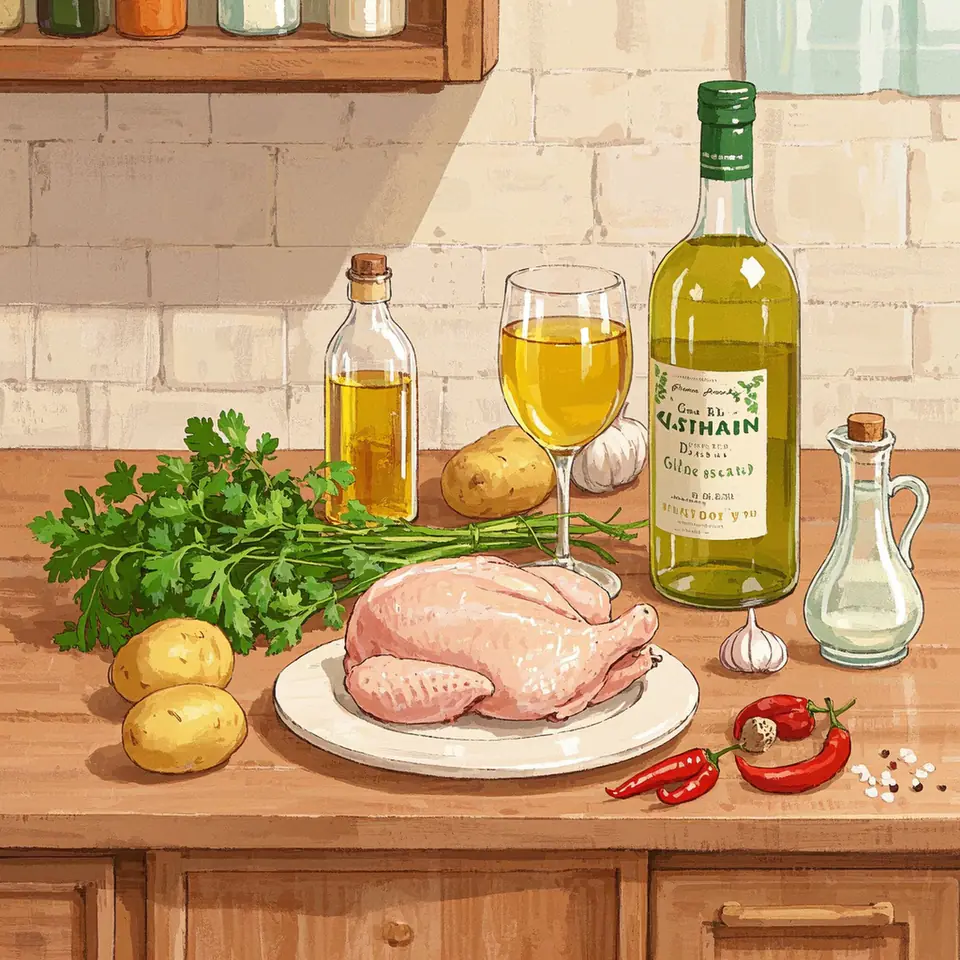
Preheat your oven to 450°F. Take the chicken and pat it very dry using paper towels. This step is important as it helps the chicken brown nicely. Next, grab a large rimmed baking sheet. Do not line it with parchment paper or tin foil because we'll be making a sauce in this pan later. Place the chicken and sausage on this sheet pan. Then, take a separate sheet pan and line it with parchment paper. Add the potatoes to this pan. Now, drizzle olive oil over the chicken, sausage, and potatoes. Sprinkle salt and pepper evenly over all the ingredients on both sheet pans.
Put both sheet pans in the preheated oven and roast the chicken, sausage, and potatoes. Keep an eye on them until the meat is cooked through. To check, insert an instant - read thermometer into the thickest part of the meat. It should read 165°F. Also, the potatoes should be tender on the inside and crispy on the outside. This will take about 20 to 30 minutes, depending on the cut of chicken. If, after the meat is cooked through, the chicken isn't browned to your liking, turn on the broiler to high and broil the chicken for a few minutes until it turns golden. Once done, transfer the chicken and sausage to a plate.
While the chicken and potatoes are roasting, take a small bowl. Add the garlic, white wine, chicken broth, Peppadew peppers, and white wine vinegar to the bowl. Use a whisk to mix all these ingredients together until well - combined. Then, season the mixture with salt and pepper to taste.
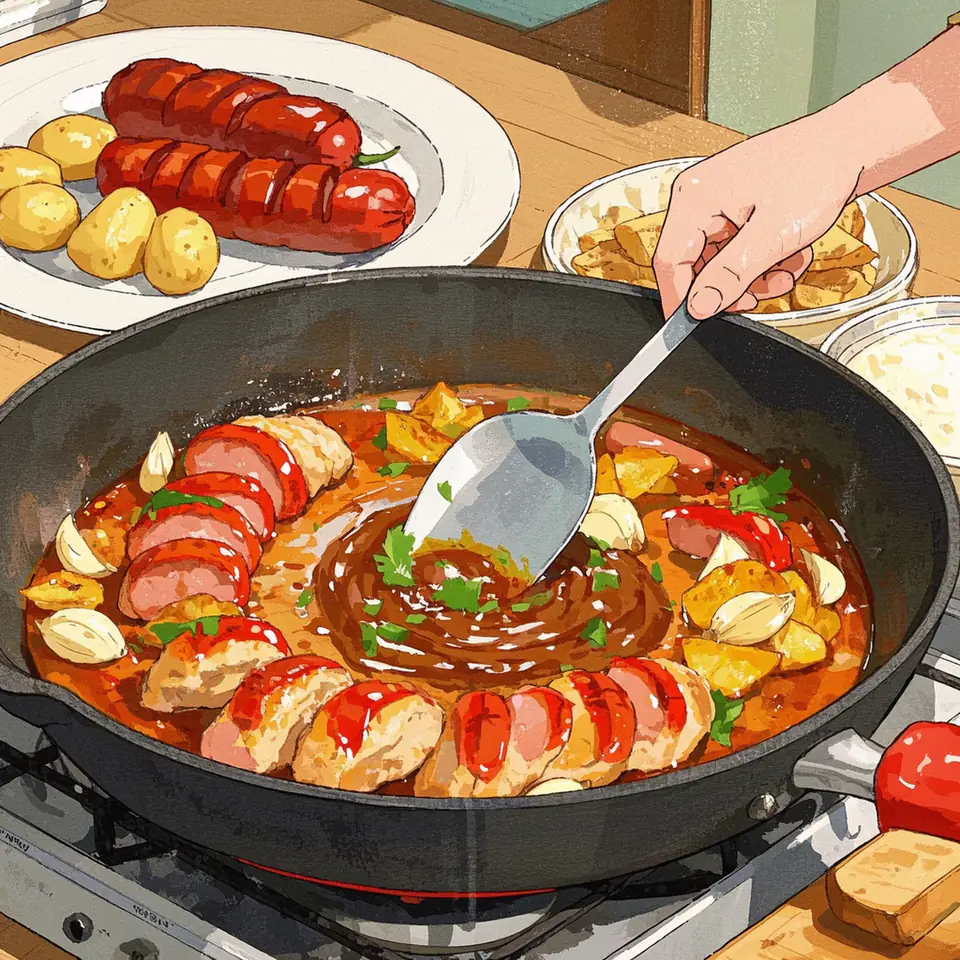
As soon as you take the chicken and sausage out of the sheet pan, pour the white wine mixture into the empty sheet pan. Grab a spatula or a spoon and start stirring the mixture around in the pan. Make sure to scrape up any browned bits that are stuck to the bottom of the pan. Let the mixture cook in the remaining heat of the pan until the garlic becomes fragrant, which should take about 1 minute. You can either pour this sauce over the chicken and sausage on the plate or return the chicken and sausage back to the sheet pan to serve.
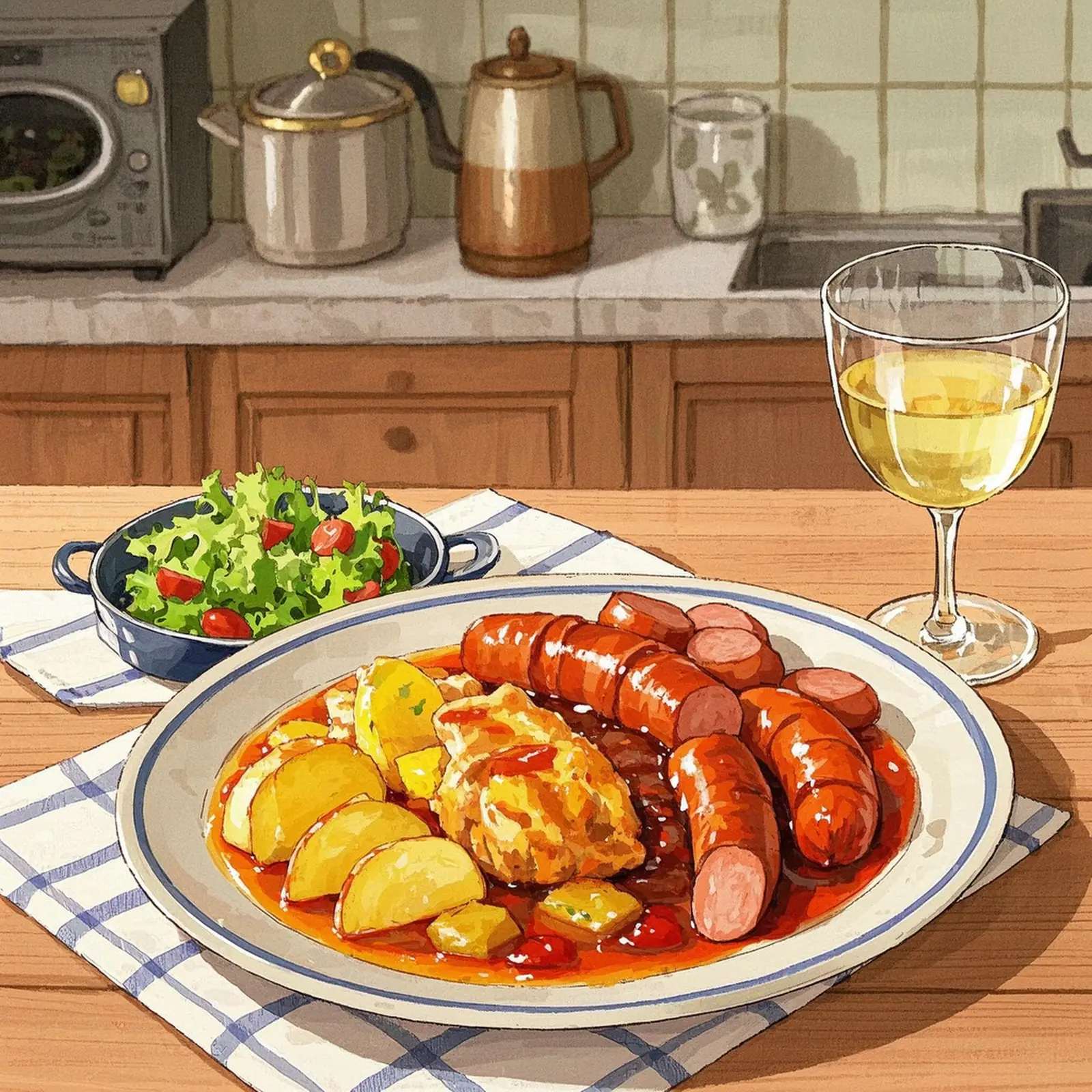
Sprinkle parsley over the chicken and sausage. Serve the chicken and sausage along with the crispy roasted potatoes.
Nutrition
Per serving (2 servings)
325
Calories
23g
Protein
15g
Carbs
18g
Fat
300mg
Sodium
Quick Answers
Recipe at a glance
Recipe metadata
Base recipe yield
Estimated cook difficulty
Tag-based classification
Meal-type tag
Parsed from steps
Steps with timer guidance
Per base serving (if available)
FAQ
Recipe Questions
Show
FAQ
Recipe Questions
How many servings does this sheet pan chicken scarpariello recipe make?
This recipe makes 4 servings. It is a one - pan dinner that includes chicken, sausage, and potatoes.
What temperature should the chicken be cooked to?
The chicken should be cooked to an internal temperature of 165°F. Insert an instant - read thermometer into the thickest part of the meat to check.
How long does it take to cook the chicken, sausage, and potatoes?
It takes about 20 to 30 minutes to roast them, depending on the cut of chicken. An additional few minutes under the broiler may be needed for browning.
Can I substitute the Italian sausage in this recipe?
No substitution info is provided, but you can use either sweet or hot Italian sausage as the recipe allows.
Is there any allergen information for this sheet pan chicken scarpariello?
The provided recipe data indicates there are no listed allergens in this recipe.
How difficult is it to make this sheet pan chicken scarpariello?
The difficulty level of this recipe is medium, with a high confidence in this assessment.
Substitutions
Show
Substitutions
chicken
turkey thighs, duck legs
Turkey thighs have a milder flavor and slightly leaner texture compared to chicken. Duck legs are fattier and have a richer, more gamey flavor. Cooking times may need to be adjusted slightly as duck and turkey can take a bit longer to cook through.
Italian sausage
chorizo, andouille sausage
Chorizo has a spicier, more intense flavor with a hint of paprika. Andouille sausage is smoky and has a firmer texture. Both can add a different flavor profile to the dish.
fingerling potatoes
new potatoes, red potatoes
New potatoes and red potatoes are similar in texture and can be used interchangeably. They will also develop a crispy exterior when roasted, but the flavor may be slightly different.
extra virgin olive oil
canola oil, vegetable oil
Canola oil and vegetable oil have a more neutral flavor compared to extra virgin olive oil. They can withstand higher heat, which is useful for roasting, but they lack the characteristic olive flavor.
dry white wine
vermouth, apple cider
Vermouth has a similar flavor profile to dry white wine and can add a bit of complexity. Apple cider will give the sauce a sweeter, fruitier flavor. If using apple cider, you may need to adjust the amount of vinegar to balance the sweetness.
chicken broth
vegetable broth, beef broth
Vegetable broth is a good option for a vegetarian version of the dish. It has a milder flavor. Beef broth will add a richer, meatier flavor, but it may change the overall taste of the dish slightly.
pickled Peppadew peppers
pickled jalapeños, banana peppers
Pickled jalapeños are spicier than Peppadew peppers, so adjust the quantity according to your spice tolerance. Banana peppers are milder and have a sweeter flavor.
white wine vinegar
rice vinegar, apple cider vinegar
Rice vinegar has a milder, sweeter flavor, while apple cider vinegar has a more robust, fruity flavor. Both can add acidity to the sauce, but the taste will be different.
Storage & Reheating
Show
Storage & Reheating
Refrigerator
Store leftovers in an airtight container in the fridge for 3 - 4 days.
Freezer
Freeze leftovers in a freezer - safe container for up to 3 months.
Storage Tips
- • Let the dish cool to room temperature before refrigerating or freezing.
- • Separate the chicken, sausage, potatoes, and sauce if freezing for better reheating results.
Reheating Tips
- • For the oven, preheat to 350°F, place the dish in an oven - safe container, cover with foil to prevent drying, and heat until warmed through, about 15 - 20 minutes. Stir halfway if possible.
- • In the microwave, place in a microwave - safe dish, cover with a microwave - safe lid or plastic wrap, leaving a small vent. Heat in 1 - 2 minute intervals, stirring between, until heated through.
Safety Notes
- • Ensure the chicken reaches an internal temperature of 165°F when reheating to prevent foodborne illness.
Troubleshooting
Show
Troubleshooting
Chicken is not browning properly
Likely cause: Chicken was not patted dry enough before roasting, or the oven temperature was too low
Make sure to thoroughly pat the chicken dry with paper towels before roasting. If the chicken isn't browning after the initial roasting time, turn on the broiler to high and broil for a few minutes until it turns golden
Chicken is undercooked
Likely cause: Roasting time was too short, or the oven temperature was lower than set
Insert an instant - read thermometer into the thickest part of the chicken. If it reads below 165°F, return the chicken to the oven and continue roasting until it reaches the correct temperature
Chicken is overcooked and dry
Likely cause: Roasting time was too long, or the oven temperature was too high
Next time, keep a closer eye on the chicken and use an instant - read thermometer to check for doneness. If the chicken is already overcooked, you can try adding a bit of the sauce or some extra chicken broth to moisten it
Potatoes are not crispy
Likely cause: Potatoes were not cut into the right size, or they were not roasted long enough
Make sure to cut the potatoes into evenly sized pieces (halved or quartered). If the potatoes are not crispy after the initial roasting time, leave them in the oven for a few more minutes until they reach the desired crispiness
Potatoes are undercooked
Likely cause: Roasting time was too short, or the potatoes were cut too thick
Return the potatoes to the oven and continue roasting until they are tender on the inside. If the potatoes were cut too thick, you may need to adjust the roasting time accordingly next time
Sauce is too bland
Likely cause: Not enough salt, pepper, or other seasonings were added to the sauce
Taste the sauce and add more salt, pepper, or other seasonings to your liking. You can also add a bit more of the pickled Peppadew peppers for extra flavor
Garlic in the sauce burns
Likely cause: The pan was too hot when the sauce was added, or the sauce was cooked for too long
Reduce the heat when adding the sauce to the pan. If the garlic has already burned, you can strain the sauce to remove the burned bits and add a fresh clove of grated or pressed garlic to the sauce