Back to Recipes
Sign InRequest Recipe
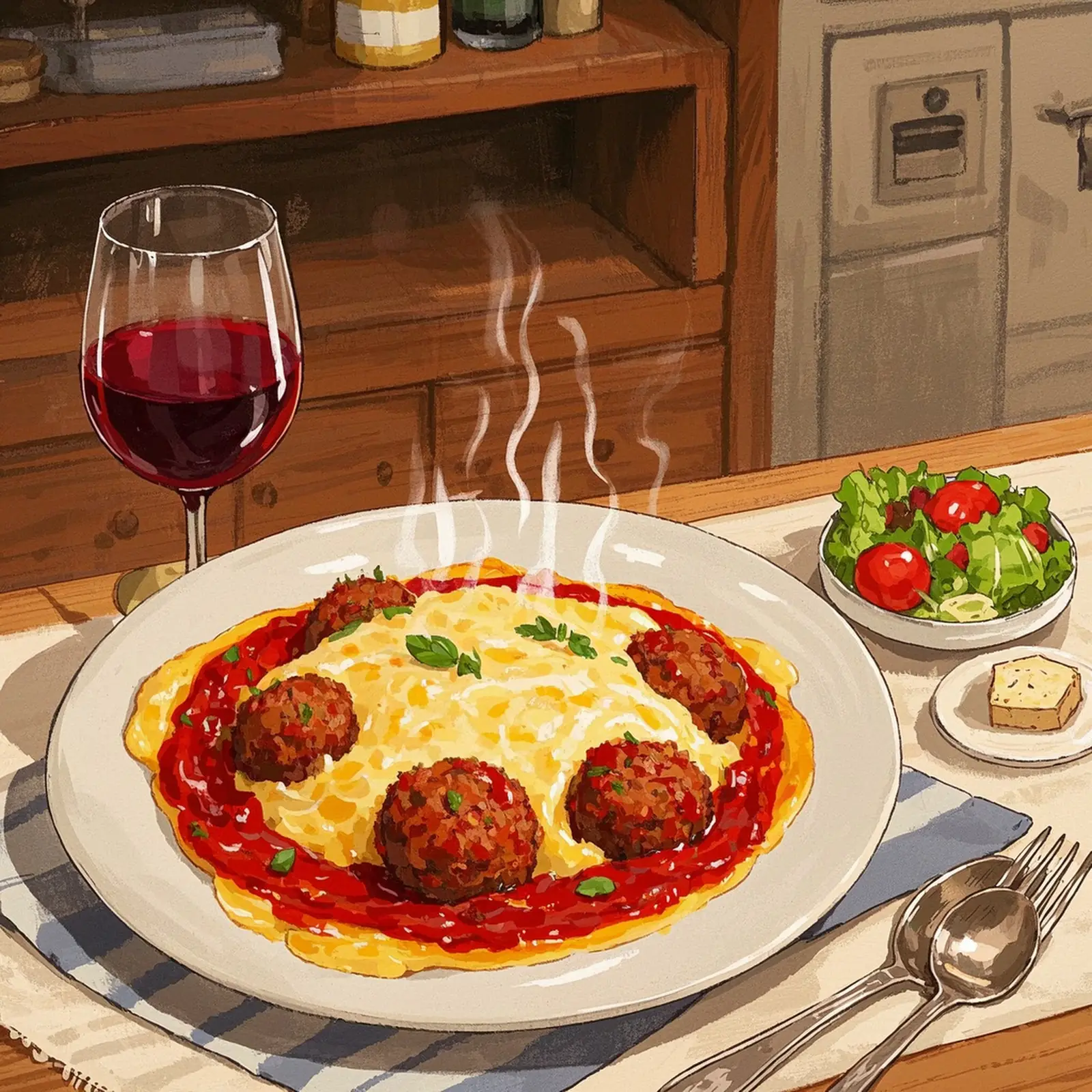
Polenta with Italian Style Meatballs plated dish
🇮🇹Italiandinnerslow - cookedhigh - protein

Polenta with Italian Style Meatballs

Contains: dairy, wheat/gluten
Prep 60m
easy4 servings30g protein

Share This Recipe

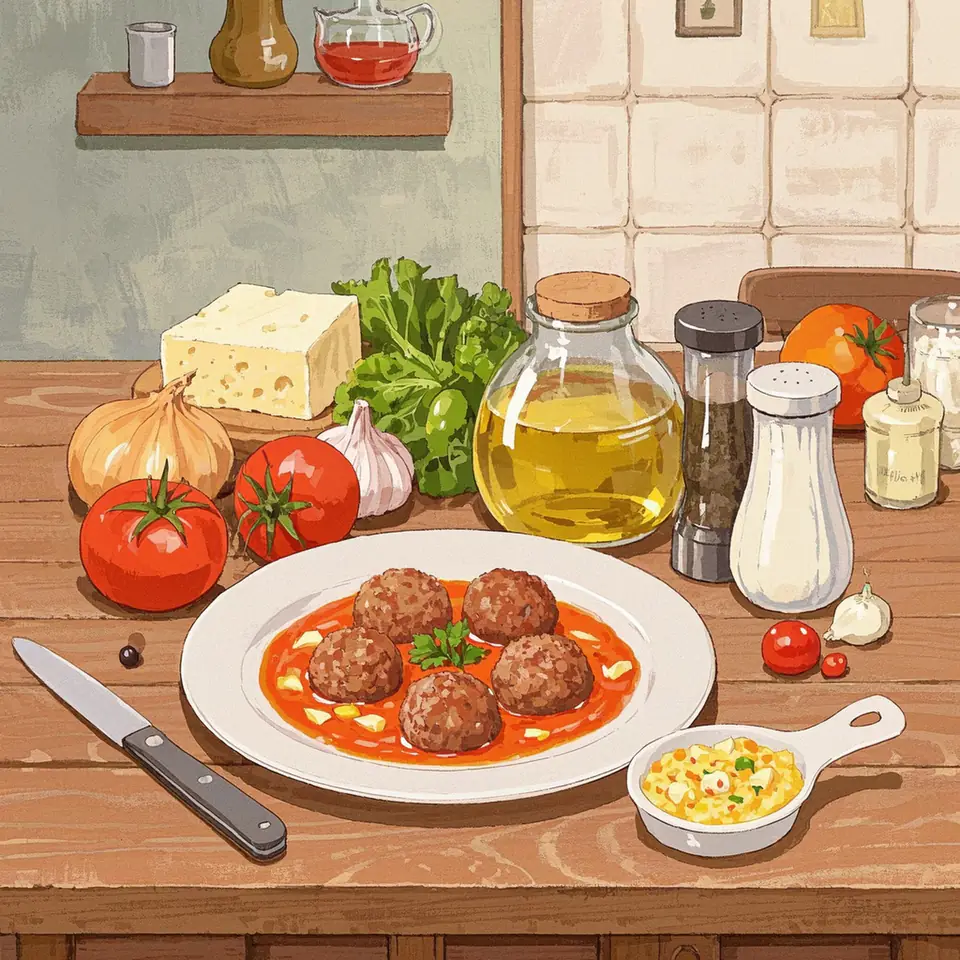
Polenta with Italian Style Meatballs ingredient setup

Ingredients

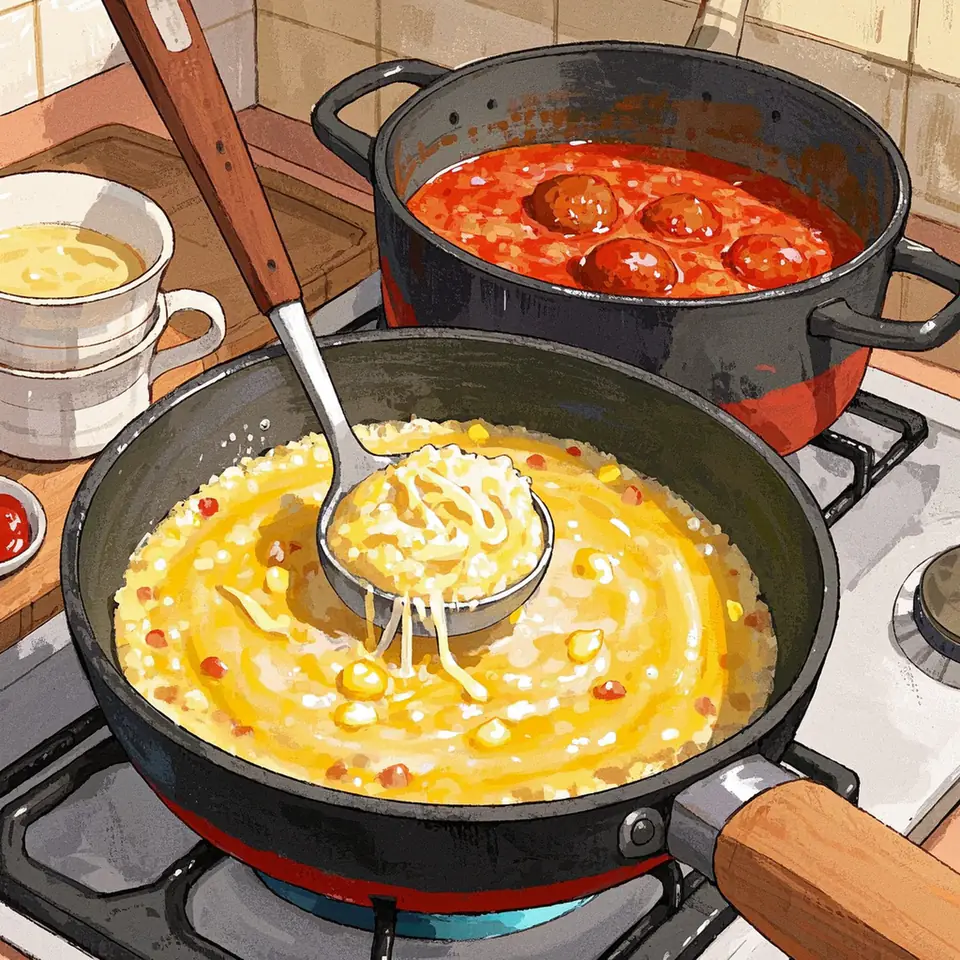
Polenta with Italian Style Meatballs cooking process

Cooking Process

Steps

1

Place a large saucepan with a lid on the stove. Pour the meatballs into the fra diavolo sauce in the saucepan. Heat the mixture over medium heat. Stir the meatballs and sauce occasionally for 20 - 25 minutes, ensuring the meatballs are heated through and the flavors meld.

heatstir20-25 min
2

Take a second large saucepan and add olive oil to it. Heat the oil over medium heat. Once the oil is shimmering, add the onions and garlic to the pan. Cook them until they become translucent and soft, which should take about 3 - 4 minutes.

heataddcook3-4 min
3

Pour the vegetable stock into the saucepan with the cooked onions and garlic. Bring the stock to a rolling boil over medium - high heat.

pourbring
4

Reduce the heat to a gentle simmer. While constantly stirring the boiling stock with a whisk, slowly pour in the polenta in a steady stream. This helps prevent lumps from forming.

reducestirpour
5

Continue whisking the polenta mixture as it cooks for 5 minutes. Keep an eye on it to ensure it thickens evenly and doesn't stick to the bottom of the pan.

whiskcook5-5 min
6

Whisk the ricotta, romano, and parmesan cheeses into the polenta until they are fully incorporated and the polenta is smooth. Then, season the polenta with salt and black pepper to your taste.

whiskseason
7

To serve, divide the cooked polenta evenly among bowls. Then, spoon the meatballs and fra diavolo sauce over the top of the polenta in each bowl.

dividespoon
8

Garnish each bowl of polenta with Italian Style Meatballs with additional parmesan or romano cheese, and serve immediately.

serve

Nutrition

Per serving (2 servings)

365

Calories

15g

Protein

35g

Carbs

15g

Fat

500mg

Sodium

Quick Answers

Recipe at a glance

Answer-first
Servings
4

Base recipe yield

Difficulty
easy

Estimated cook difficulty

Cuisine
Italian

Tag-based classification

Best For
dinner

Meal-type tag

Allergens
dairy, wheat/gluten

Detected from ingredients + tags

Timed Steps
3

Steps with timer guidance

Nutrition Snapshot
730 cal • 30g protein

Per base serving (if available)

FAQ

Recipe Questions

Show

How many servings does this polenta with Italian style meatballs recipe make?

This recipe makes 4 servings. It's designed to serve a small group or family.

How long does it take to prepare this recipe?

The prep time is 60 minutes. This includes all the steps from heating the meatballs to cooking the polenta.

What are the allergens in this polenta with Italian style meatballs recipe?

The allergens in this recipe are dairy and wheat/gluten. Be cautious if you have allergies to these ingredients.

What is the difficulty level of this recipe?

The difficulty level is easy. It's suitable for home cooks of all skill levels.

How long should I heat the meatballs in the fra diavolo sauce?

Heat the meatballs in the fra diavolo sauce for 20 - 25 minutes. Stir occasionally to heat them through and meld the flavors.

Substitutions

Show

Italian Style Meatballs

Homemade Italian meatballs, Beef meatballs, Chicken meatballs

Using homemade meatballs allows you to control the ingredients and seasonings. Beef meatballs will have a rich, hearty flavor, while chicken meatballs are lighter. The cooking time may vary slightly depending on the size and type of meatballs used.

Fra Diavolo Sauce

Marinara sauce, Spaghetti sauce

Marinara and spaghetti sauce are more common and can be easily found. However, fra diavolo sauce is typically spicier, so you may need to add some red pepper flakes to the substitute sauce to achieve a similar flavor.

Olive Oil

Canola oil, Vegetable oil

Canola and vegetable oil have a more neutral flavor compared to olive oil. They can be used interchangeably, but olive oil adds a distinct Mediterranean flavor to the dish.

White Onion

Yellow onion, Red onion

Yellow and red onions can be substituted for white onions. Yellow onions have a more pungent flavor, while red onions are milder and sweeter. The color of the dish may be slightly affected when using red onions.

Garlic

Garlic powder, Granulated garlic

Garlic powder and granulated garlic are convenient alternatives. Use about 1/2 teaspoon of garlic powder or 3/4 teaspoon of granulated garlic for every 1 clove of fresh garlic. However, fresh garlic has a more intense and complex flavor.

Vegetable Stock

Chicken stock, Beef stock

Chicken and beef stock will add a meaty flavor to the polenta. If you're vegetarian, stick with vegetable stock. The flavor of the dish will be different depending on the type of stock used.

Romano Cheese

Asiago cheese, Grana Padano cheese

Asiago and Grana Padano are similar hard cheeses with a nutty flavor. They can be used as a substitute for romano cheese in grating and melting applications.

Ricotta Cheese

Cottage cheese, Greek yogurt

Cottage cheese can be blended to a smoother consistency to mimic ricotta. Greek yogurt adds a tangy flavor and creaminess. However, the texture may be slightly different from ricotta cheese.

Storage & Reheating

Show

Refrigerator

Store leftovers in an airtight container in the fridge for 3 - 4 days.

Freezer

Freeze leftovers in a freezer - safe container for up to 3 months.

Storage Tips

  • Ensure the container is airtight to prevent freezer burn and maintain freshness.

Reheating Tips

  • Reheat in the microwave in short intervals, stirring between each, to avoid drying out. If using the oven, cover the dish with foil to keep it moist. Heat until the internal temperature reaches a safe level.

Safety Notes

  • Always reheat leftovers to an internal temperature of at least 165°F (74°C) to ensure safety.

Troubleshooting

Show

Meatballs are undercooked

Likely cause: The meatballs were not heated for the full 20 - 25 minutes or the heat was set too low.

Continue heating the meatballs and sauce over medium heat, stirring occasionally, until the meatballs are heated through. Check by cutting into one to ensure it is no longer pink in the center.

Onions and garlic are burned

Likely cause: The heat was set too high or they were cooked for longer than 3 - 4 minutes without proper attention.

Remove the burned onions and garlic from the pan. Add a new batch of diced onions and minced garlic to the oil and cook over medium heat, watching closely to prevent burning again.

Polenta has lumps

Likely cause: The polenta was poured too quickly into the boiling stock without constant stirring.

Use a whisk to break up the lumps as much as possible while continuing to cook and stir the mixture. If the lumps are too stubborn, you can try using an immersion blender to puree the mixture until smooth.

Polenta is too thick

Likely cause: Too much polenta was added or it was cooked for too long, causing excessive evaporation of the liquid.

Gradually stir in small amounts of additional vegetable stock until the polenta reaches your desired consistency. Keep whisking and cooking for a short time to incorporate the added liquid.

Polenta is too thin

Likely cause: Not enough polenta was added or it was not cooked long enough to thicken properly.

Continue cooking the polenta over low heat, whisking constantly, for a few more minutes to allow it to thicken. If it still doesn't reach the desired consistency, you can add a small amount of additional polenta, whisking well to incorporate.

The dish lacks flavor

Likely cause: Not enough salt, black pepper, or cheese was added, or the meatballs and sauce were not heated long enough to meld the flavors.

Add more salt and black pepper to taste. You can also add a bit more grated romano or parmesan cheese to the polenta and stir well. If the flavors of the meatballs and sauce are still lacking, continue heating them for a few more minutes to allow the flavors to develop further.

Polenta sticks to the bottom of the pan

Likely cause: The heat was too high or the polenta was not stirred constantly during cooking.

Reduce the heat to a very low setting and continue whisking the polenta vigorously to loosen it from the bottom of the pan. If some of the polenta is already burned, carefully scrape off the burned parts and continue cooking the remaining mixture.