MINESTRONE
Share This Recipe

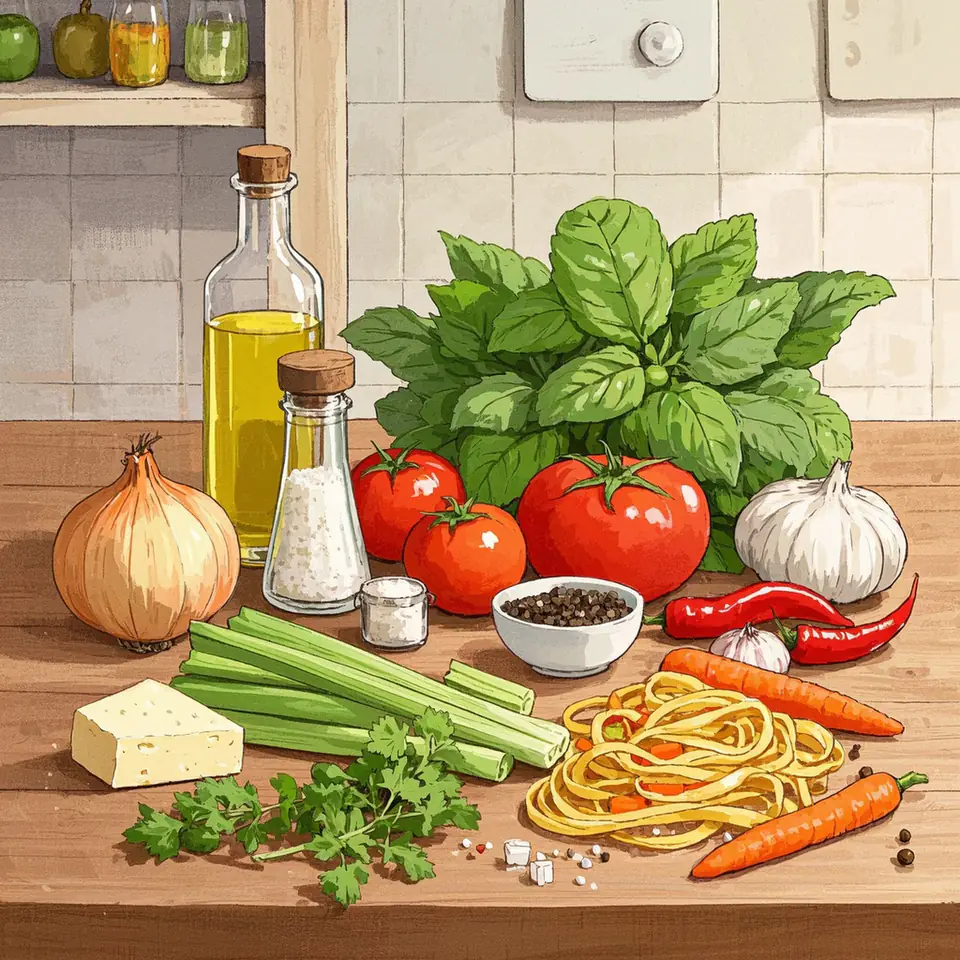
Ingredients

Cooking Process
Steps
Place a large pot on the stove and heat the olive oil over medium-high heat.
Add the onion, celery, and carrot to the hot oil in the pot.
Cook the vegetables until they become soft, which should take about 5 minutes.
Add the garlic, salt, and pepper to the pot, then cook for 1 minute until fragrant.
Add the tomatoes, broth, and dried herbs to the pot.
Reduce the heat to medium-low and let the mixture simmer for 10 minutes.
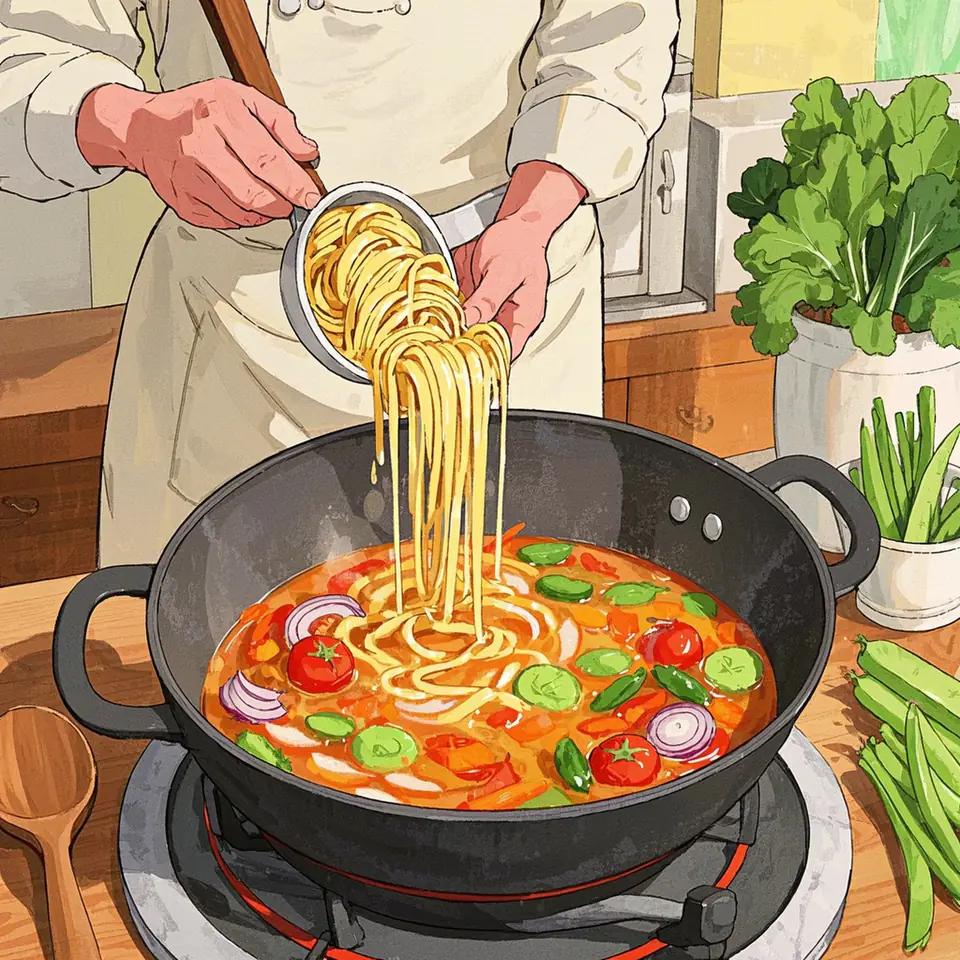
Stir the kidney beans, kale, and pasta into the pot. Cook until the pasta and vegetables are tender, about 10 minutes (depending on the recommended cooking time of the pasta).
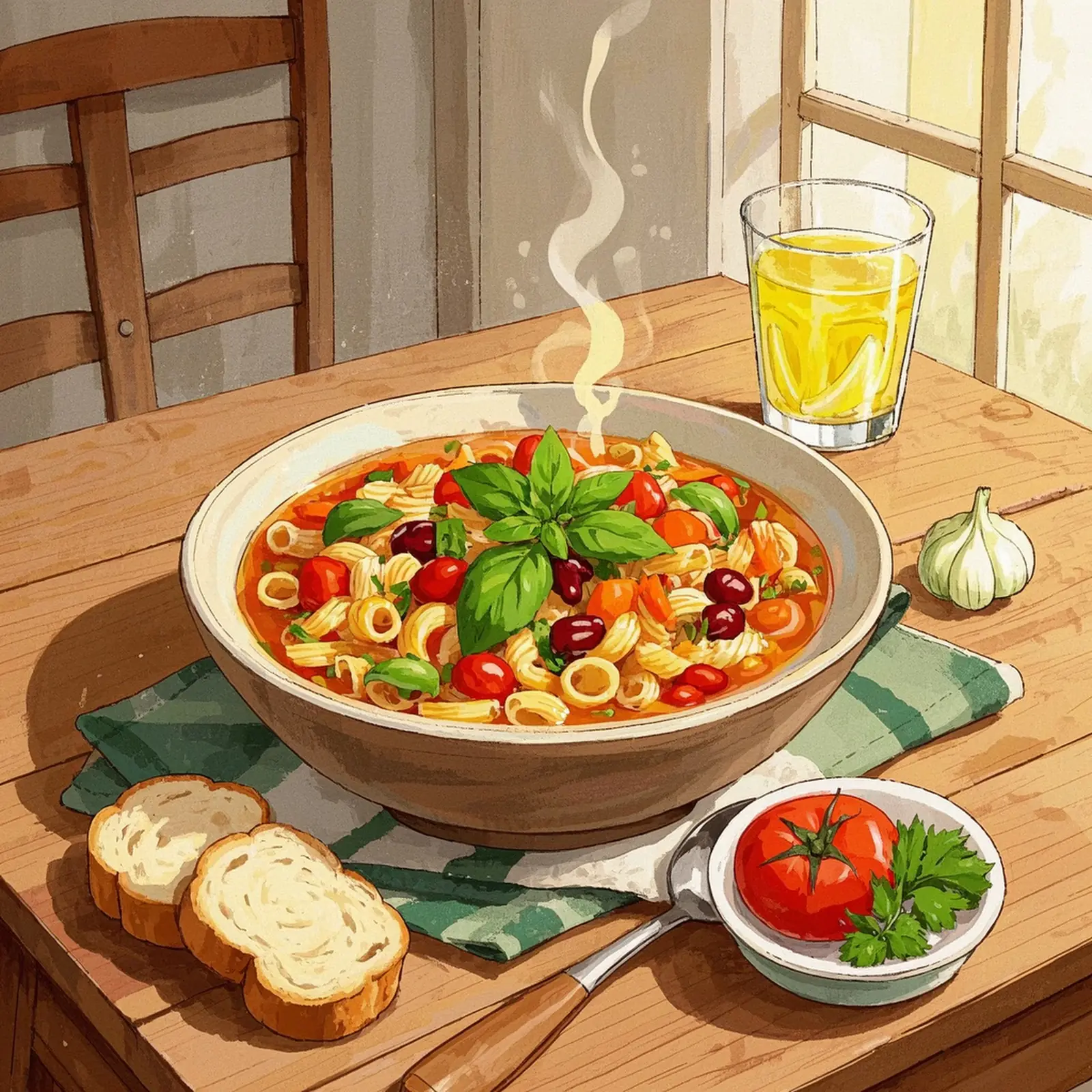
To serve, ladle the minestrone into bowls. You can optionally top it with Parmesan cheese and fresh basil.
Nutrition
Per serving (2 servings)
99
Calories
3g
Protein
17g
Carbs
2g
Fat
151mg
Sodium
Quick Answers
Recipe at a glance
Recipe metadata
Base recipe yield
Estimated cook difficulty
Tag-based classification
Meal-type tag
Detected from ingredients + tags
Steps with timer guidance
Per base serving (if available)
FAQ
Recipe Questions
Show
FAQ
Recipe Questions
How many servings does this minestrone recipe make?
This minestrone recipe makes 6 servings. It's a great quantity for a family meal or to have leftovers.
What can I substitute for the whole grain pasta?
You can use legume - based small pasta as a substitute for the whole grain pasta in this recipe. It will keep a similar texture and nutritional value.
Are there any allergens in this minestrone?
Yes, this minestrone contains dairy, wheat/gluten, and soy. Be cautious if you have allergies to these ingredients.
How long does it take to make this minestrone?
The total time to make this minestrone is about 45 minutes. This includes all the cooking and preparation steps.
Can I prep this minestrone ahead of time?
Yes, since it's an easy - difficulty recipe, you can prep the vegetables ahead. Just follow the steps and store them properly until you're ready to cook.
Substitutions
Show
Substitutions
extra virgin olive oil
canola oil, sunflower oil
Canola and sunflower oils have a more neutral flavor compared to the fruity taste of extra virgin olive oil. They can withstand high - heat cooking well, similar to olive oil.
onion
shallots, leeks
Shallots have a milder and sweeter flavor than onions. Leeks have a more delicate onion - like flavor. Both can be used in similar quantities, but leeks may take a bit longer to cook until soft.
vegetable or chicken broth
beef broth, mushroom broth
Beef broth will add a richer and meatier flavor to the minestrone. Mushroom broth gives an earthy flavor. Adjust the amount of salt as beef broth can be quite salty.
kidney beans
cannellini beans, pinto beans
Cannellini beans are creamy and have a mild flavor. Pinto beans have a slightly nutty flavor. Both can be used in the same quantity as kidney beans and will cook in a similar time.
kale
spinach, swiss chard
Spinach wilts much faster than kale, so it should be added towards the end of the cooking time. Swiss chard has a similar texture to kale and can be cooked for the same amount of time.
whole grain or legume - based small pasta
rice, quinoa
Rice and quinoa are good gluten - free alternatives. They may require a bit more liquid and a longer cooking time compared to small pasta. Adjust the broth amount accordingly.
Parmesan cheese
pecorino romano cheese, grated nutritional yeast
Pecorino romano has a sharp and salty flavor similar to Parmesan. Nutritional yeast gives a cheesy, nutty flavor and is suitable for vegan diets.
dried basil
fresh basil, dried oregano
If using fresh basil, use 3 times the amount of dried basil. Fresh basil has a more vibrant flavor. Dried oregano can be used as a substitute, but it will change the overall herb profile of the dish slightly.
Storage & Reheating
Show
Storage & Reheating
Refrigerator
Store minestrone in an airtight container in the fridge for up to 3 - 4 days.
Freezer
Freeze minestrone in a freezer - safe container for up to 3 months.
Storage Tips
- • Let the minestrone cool to room temperature before refrigerating or freezing to prevent spoilage.
- • Label the container with the date of storage.
Reheating Tips
- • Reheat on the stovetop over medium - low heat, stirring occasionally to avoid burning and ensure even heating.
- • If the soup has thickened in the fridge, add a little water or broth to reach the desired consistency.
Safety Notes
- • Always ensure the minestrone is heated to a safe internal temperature throughout before consuming.
Troubleshooting
Show
Troubleshooting
Onion, celery, and carrot are not soft after 5 minutes
Likely cause: The heat was set too low, or the vegetables were chopped into large pieces
Increase the heat to medium - high and continue cooking until the vegetables are soft. If the vegetables are too large, remove them, chop them smaller, and add them back to the pot.
Garlic burns while cooking for 1 minute
Likely cause: The heat was too high
Immediately remove the pot from the heat. Discard the burned garlic, mince a new clove, and add it to the pot with the heat turned down to medium.
The soup is bland
Likely cause: Not enough salt, pepper, or dried herbs were added
Taste the soup and add small amounts of fine sea salt, black pepper, dried basil, or dried oregano. Stir well and taste again until the desired flavor is achieved.
The soup is boiling over during the simmering process
Likely cause: The heat was not reduced enough or the pot is too small
Reduce the heat to low. If the pot is too small, transfer the soup to a larger pot and continue simmering on low heat.
Pasta and vegetables are still hard after 10 minutes
Likely cause: The recommended cooking time of the pasta was longer than expected, or the heat was too low
Increase the heat to medium and continue cooking until the pasta and vegetables are tender. Check the pasta package for the exact cooking time and adjust accordingly.
The soup is too thick
Likely cause: Too much liquid evaporated during cooking
Add some more low - sodium vegetable or chicken broth to the pot and stir well until the desired consistency is reached.
The soup has a burnt taste
Likely cause: The soup was cooked on high heat for too long or was left unattended
Remove the burnt parts if possible. If the taste is still strong, transfer the soup to a new pot, add a bit more broth, and simmer gently to try to mellow the flavor.