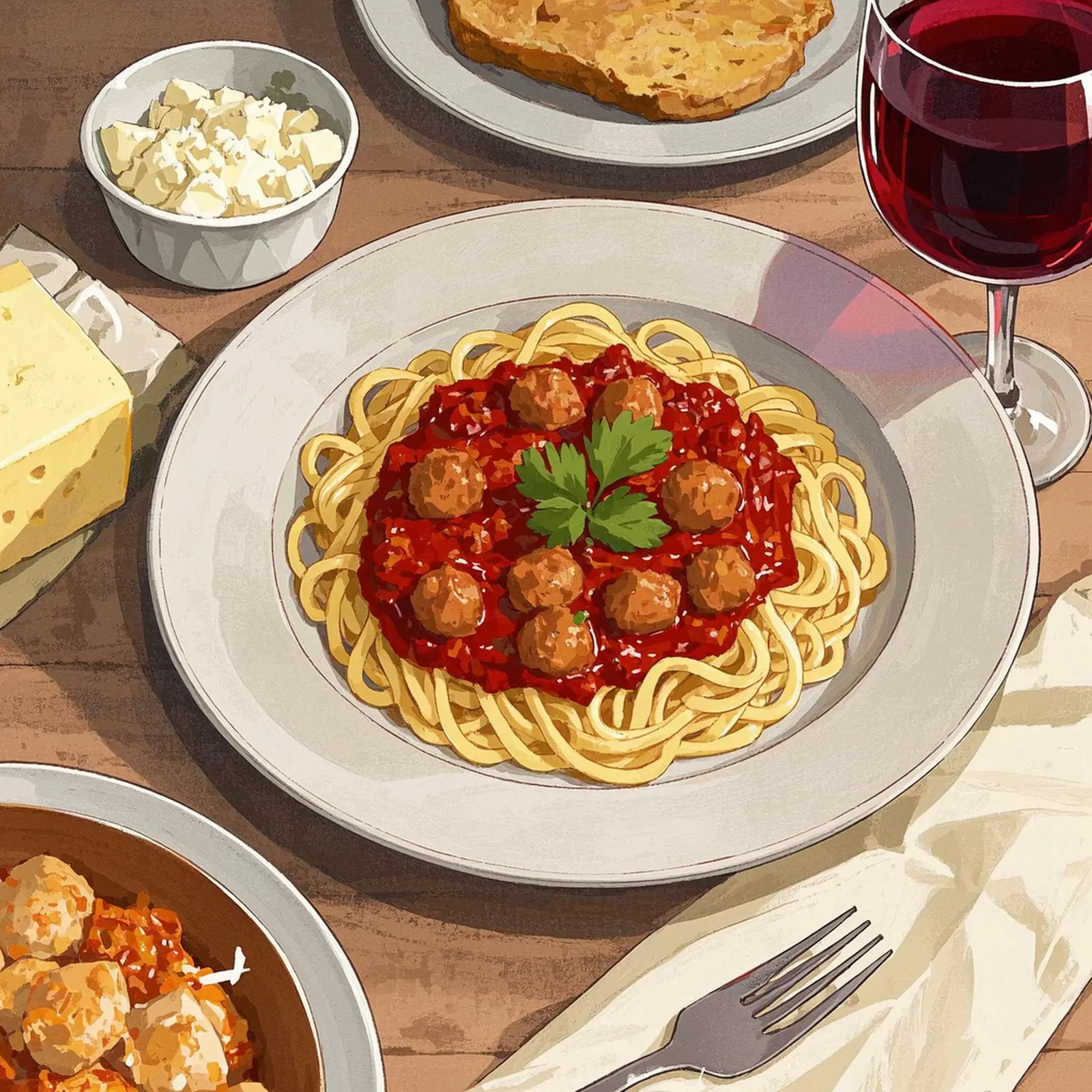
Italian Sunday Gravy (Sugo) plated dish
🇮🇹Italiandinnerslow-cookedhigh-protein

Italian Sunday Gravy (Sugo)

Contains: dairy, wheat/gluten
Prep 20mCook 240mTotal 240m
medium2 servings32g protein

Share This Recipe

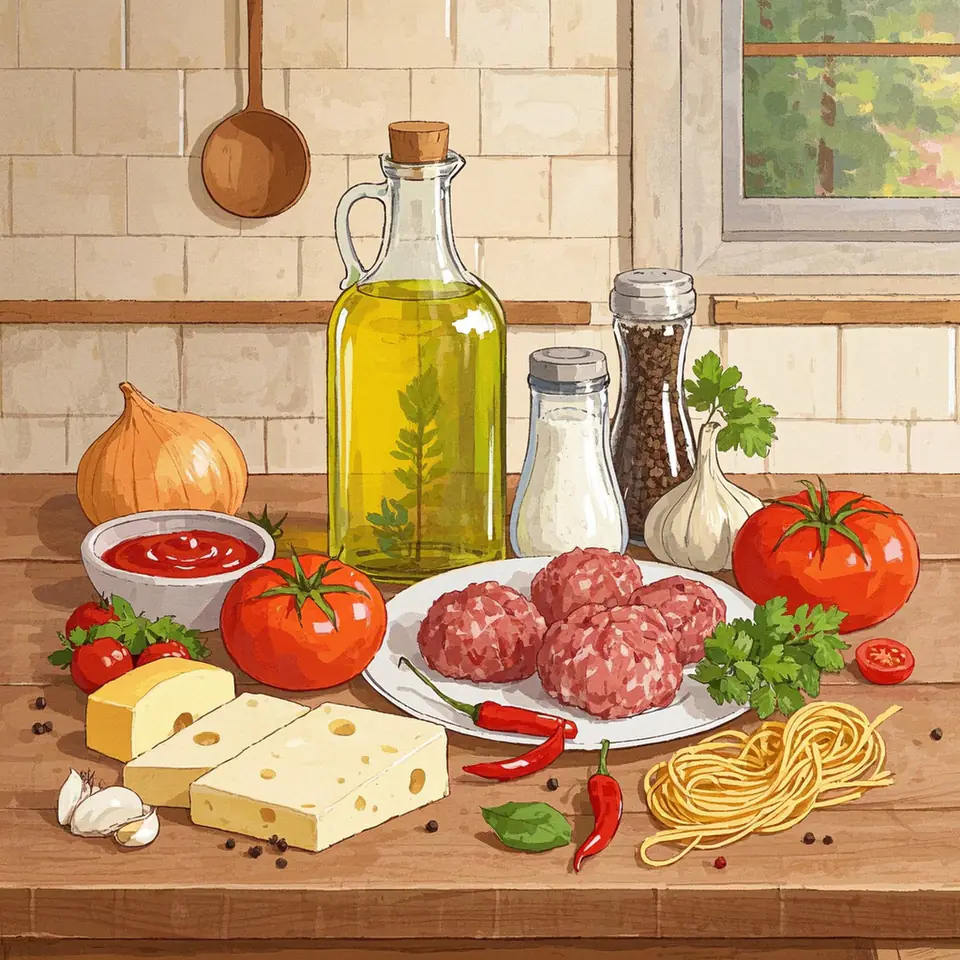
Italian Sunday Gravy (Sugo) ingredient setup

Ingredients

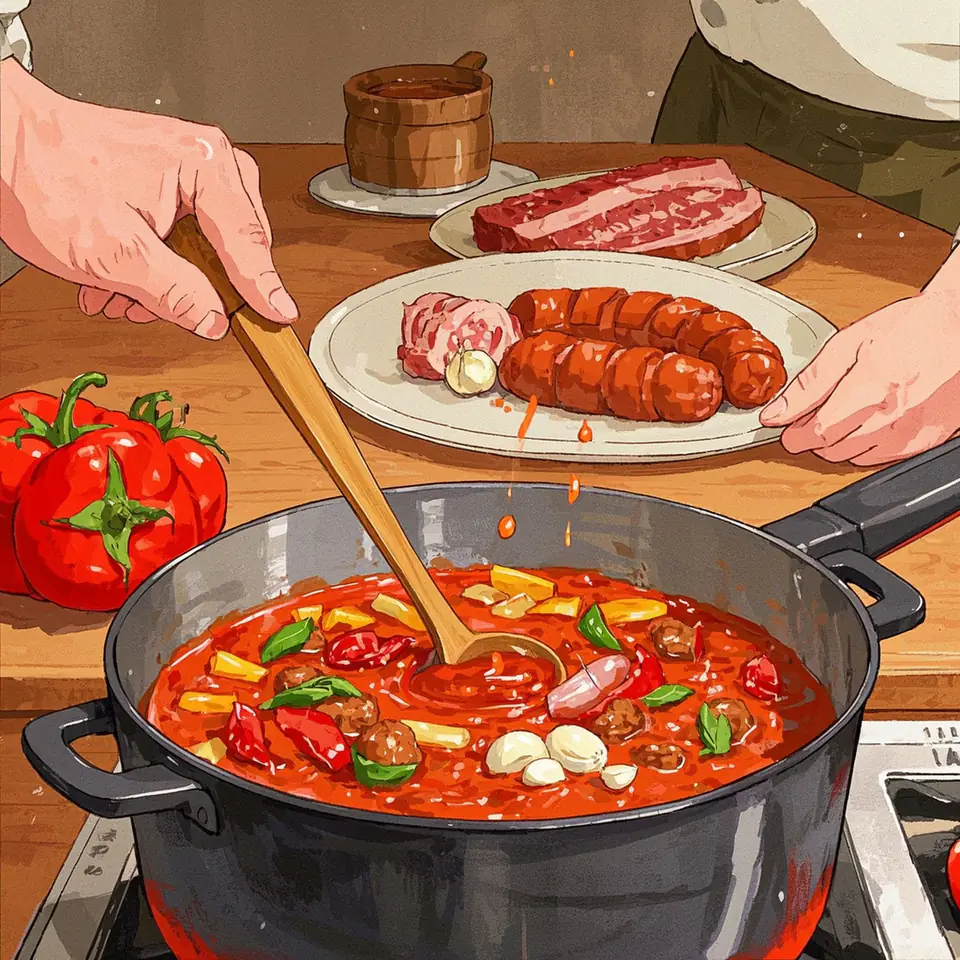
Italian Sunday Gravy (Sugo) cooking process

Cooking Process

Recipe Note

Flavor + context before you cook

""

Steps

1

Pour the olive oil into a large pot or Dutch oven and heat it over high heat. Season the pork on all sides with salt and pepper. Place the pork in the hot oil and sear it until it's nicely browned on all sides. Once browned, remove the pork from the pot and set it aside.

heatseasonsearremove
2

Lower the heat to medium. Add the onions to the pot and sauté them until they become soft, which should take about 5 minutes.

loweraddsauté5-5 min
3

Add the garlic and chili flakes to the pot. Continue cooking for another 2 minutes, until the garlic becomes fragrant.

addcook2-2 min
4

Stir in the tomato paste and keep stirring for about 1 - 2 minutes, until it darkens slightly and coats the other ingredients.

stir1-2 min
5

Add the tomatoes, bay leaves, and parsley to the pot. Season the mixture with salt and pepper. Take one empty tomato can and fill it ½ to ¾ of the way with water. Pour the water into the pot and stir everything to combine. If you're using whole peeled tomatoes, use the back of a wooden spoon to break them apart. For a smoother sauce, you can use an immersion blender.

addseasonfillstirbreakblend
6

Bring the sauce up to a boil. Once boiling, add the pork loin, sausage, and meatballs to the pot. Then, reduce the heat to low.

bringaddreduce
7

Cover the pot, but leave the lid slightly ajar. Simmer the sauce on the lowest possible heat setting. Stir the sauce about every 20 minutes to prevent the bottom from burning. Let it simmer for about 3 hours, or until the pork is falling apart. Once done, turn off the heat and let the meats sit in the sauce until you're ready to eat.

coversimmerstirturn offallow180-180 min
8

Taste the sauce and add more salt if needed. Remove the bay leaves and any bones from the pork. Use a slotted spoon to transfer the meats to a large platter.

tasteaddremovetransfer
9

Toss the al dente pasta with a little bit of the sauce. Transfer the remaining sauce to gravy boats or another serving vessel. Serve the pasta with the platter of meats and the sauce on the side. Provide a bowl of grated cheese and a bowl of ricotta for passing at the table.

tosstransferserve

Nutrition

Per serving (2 servings)

421

Calories

32g

Protein

9g

Carbs

28g

Fat

694mg

Sodium

Quick Answers

Recipe at a glance

Answer-first
Total Time
240 minutes

Recipe metadata

Difficulty
medium

Estimated cook difficulty

Cuisine
Italian

Tag-based classification

Best For
dinner

Meal-type tag

Allergens
dairy, wheat/gluten

Detected from ingredients + tags

Timed Steps
4

Steps with timer guidance

Nutrition Snapshot
421 cal • 32g protein

Per base serving (if available)

FAQ

Recipe Questions

Show

How long does it take to make Italian Sunday Gravy (Sugo)?

It takes about 260 minutes in total, with 20 minutes of prep time and 240 minutes of cooking time. The sauce simmers for about 3 hours until the pork falls apart.

What can I substitute for pork loin in this recipe?

You can use pork chops, ribs, and/or neck bones as a substitute for pork loin.

Are there any allergens in Italian Sunday Gravy (Sugo)?

Yes, the recipe contains allergens such as dairy and wheat/gluten.

Can I use crushed tomatoes instead of whole peeled tomatoes?

Yes, you can use 2 28 - ounce cans of crushed tomatoes instead of whole peeled tomatoes.

How difficult is it to make Italian Sunday Gravy (Sugo)?

The difficulty level is medium. It involves multiple steps like searing, sautéing, and long - time simmering.

What is the nutritional value of Italian Sunday Gravy (Sugo)?

Per serving, it has 421 kcal, 28 g fat, 9 g carbs, 2 g fiber, 5 g sugar, and 32 g protein. Sodium content is 694 mg.

Substitutions

Show

extra virgin olive oil

vegetable oil, canola oil

Vegetable and canola oils have a more neutral flavor compared to the fruity taste of extra virgin olive oil. They also have a higher smoke point, which can be useful for high - heat searing.

pork loin

beef chuck roast, lamb shoulder

Beef chuck roast has a rich, beefy flavor and will add a different taste profile to the sauce. Lamb shoulder has a distinct, gamey flavor. Both may require slightly longer cooking times to become tender.

yellow onion

white onion, red onion

White onions have a sharper, more pungent flavor, while red onions are milder and sweeter. They can be used interchangeably, but red onions may add a slight pink color to the sauce.

garlic

shallots

Shallots have a milder, sweeter flavor than garlic. You may need to use a bit more shallot to achieve a similar flavor intensity, and they cook faster, so adjust the cooking time accordingly.

whole peeled tomatoes

diced tomatoes

Diced tomatoes are already cut up, so you won't need to break them apart with a wooden spoon. The texture of the sauce may be slightly different, being less chunky if using whole peeled tomatoes that are broken up.

Italian sausage

chorizo, andouille sausage

Chorizo has a spicy, smoky flavor from Spanish paprika, and andouille has a smoky, spicy, and slightly sweet flavor. These are riskier substitutions as they may deviate significantly from the traditional Italian flavor profile.

pecorino Romano cheese

Parmesan cheese

Parmesan has a similar salty, nutty flavor to pecorino Romano. However, pecorino Romano is generally sharper and saltier, so you may need to adjust the amount of salt in the recipe if using Parmesan.

ricotta cheese

cottage cheese

Cottage cheese has a similar creamy texture to ricotta, but it has a more curdled appearance. It's also slightly less rich. You can blend it in a food processor for a smoother texture closer to ricotta.

Storage & Reheating

Show

Refrigerator

Store the Italian Sunday Gravy in an airtight container in the refrigerator for up to 3 - 4 days.

Freezer

Freeze the gravy in a freezer - safe container for up to 3 months.

Storage Tips

  • Let the gravy cool to room temperature before refrigerating or freezing to prevent spoilage.
  • Label the container with the date of storage.

Reheating Tips

  • Reheat the gravy on the stovetop over low - medium heat, stirring occasionally to prevent burning and ensure even heating.
  • If the gravy seems too thick after reheating, add a little water or broth to reach the desired consistency.

Safety Notes

  • Always reheat the gravy to a safe internal temperature to kill any potential bacteria.
  • Do not refreeze the gravy once it has been thawed.

Troubleshooting

Show

Pork doesn't brown properly during searing

Likely cause: The pot wasn't hot enough, or the pork pieces were overcrowded in the pot, causing the temperature to drop.

Make sure the pot is preheated over high heat before adding the pork. If necessary, sear the pork in batches to avoid overcrowding.

Onions burn while sautéing

Likely cause: The heat was set too high, or the onions were not stirred frequently enough.

Lower the heat to medium and stir the onions constantly to ensure even cooking.

Garlic burns when added to the pot

Likely cause: The garlic was added too late after the onions were cooked, and the heat was still high, or the garlic slices were too thick.

Add the garlic as soon as the onions are soft. Make sure the garlic is very thinly sliced as per the recipe, and keep an eye on it during cooking.

Tomato paste sticks to the bottom of the pot and burns

Likely cause: Not stirring the tomato paste enough while cooking, or cooking it for too long at a high heat.

Stir the tomato paste continuously for the recommended 1 - 2 minutes. If it starts to stick, reduce the heat slightly.

The sauce is too thick

Likely cause: Not adding enough water when using the tomato can as a measure, or simmering the sauce for too long without stirring.

Add more water to the pot gradually, stirring well after each addition until you reach the desired consistency.

The bottom of the sauce burns during simmering

Likely cause: Not stirring the sauce frequently enough as recommended (every 20 minutes), or the heat was set too high.

Reduce the heat to the lowest possible setting and make sure to stir the sauce every 20 minutes to prevent burning.

The pork is still tough and not falling apart after 3 hours of simmering

Likely cause: The pork was not of good quality, or the simmering temperature was too high, causing the meat to dry out instead of becoming tender.

Continue simmering the sauce on low heat for an additional 30 - 60 minutes, checking the tenderness of the pork periodically. If the sauce starts to reduce too much, add a little more water.

The sauce tastes bland

Likely cause: Not adding enough salt, pepper, or red chili flakes to taste, or not cooking the ingredients long enough for the flavors to meld.

Taste the sauce and add more kosher salt, black pepper, or red chili flakes as needed. You can also let the sauce sit for a while to allow the flavors to develop further.