Italian Sausage Pasta - 30-Minute Meal
Share This Recipe

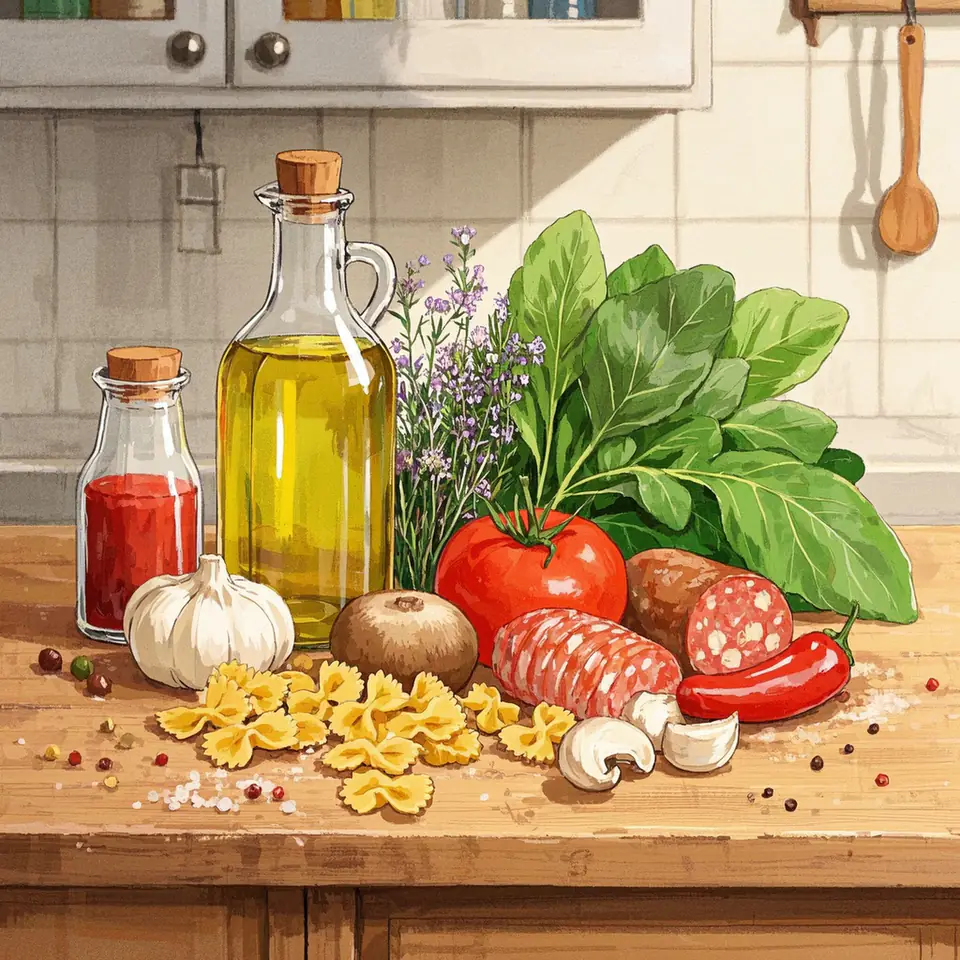
Ingredients

Cooking Process
Recipe Note
Flavor + context before you cook
""
Steps
Fill a pot with water and bring it to a rolling boil over high heat. Once the water is boiling, add the pasta and cook it according to the instructions on the package. While the pasta is cooking, continue with the rest of the recipe.
Place a large, high - sided skillet on the stove and set the heat to medium. Add 1 tablespoon of olive oil to the skillet and let it warm up for a moment.
Add the sliced mushrooms to the heated olive oil in the skillet. Cook them for 3 to 5 minutes, stirring occasionally, until they are tender and cooked through but not overly soft. Once done, use a slotted spoon to remove the mushrooms from the skillet and set them aside.
With the skillet still on medium heat, add the crumbled sausage to the now - empty skillet. Cook the sausage for about 5 minutes, breaking it up with a spatula as it cooks, until it is no longer pink and is fully cooked. Once cooked, use a spoon or a ladle to drain off any excess fat from the skillet.
To the skillet with the cooked sausage, add the minced garlic, Italian seasoning, red pepper flakes, tomato pasta sauce, and fresh spinach. Increase the heat to medium - high and bring the mixture to a boil. Once boiling, stir everything well to combine. Then, reduce the heat back to medium and cook for 5 minutes, stirring frequently, until the spinach has wilted to your desired tenderness.
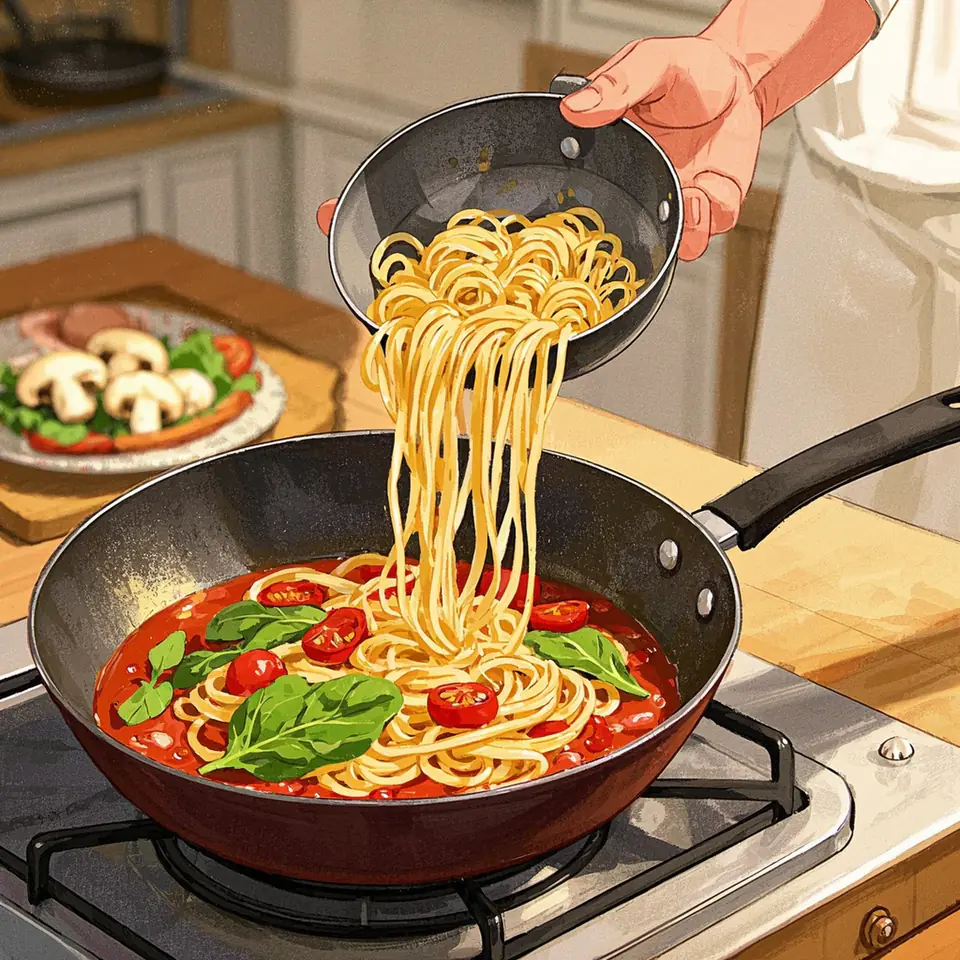
Once the pasta is cooked and drained, add it to the sauce in the skillet. Turn the heat to low and let the pasta reheat in the sauce for a few minutes.
Use a large spoon or tongs to mix the pasta, sauce, and sausage together well, ensuring that the pasta is evenly coated with the sauce. After mixing, turn off the heat and remove the skillet from the burner.
Season the pasta mixture with salt, freshly ground coarse black pepper, and additional red pepper flakes if you like. Sprinkle the cooked sliced mushrooms on top of the pasta.
Tip: use your best judgment about the salt. If the sausage is salty enough, you might not need to add any extra salt.
Nutrition
Per serving (2 servings)
764
Calories
31g
Protein
74g
Carbs
39g
Fat
1256mg
Sodium
Quick Answers
Recipe at a glance
Recipe metadata
Base recipe yield
Estimated cook difficulty
Tag-based classification
Meal-type tag
Detected from ingredients + tags
Steps with timer guidance
Per base serving (if available)
FAQ
Recipe Questions
Show
FAQ
Recipe Questions
How long does it take to make Italian Sausage Pasta?
It takes a total of 30 minutes, with 10 minutes of prep time and 20 minutes of cook time.
How many servings does this recipe make?
This recipe makes 2 servings.
Can I substitute the pasta in this recipe?
Yes, you can use farfalle (bow tie) or penne as specified in the recipe.
What are the allergens in this Italian Sausage Pasta?
The recipe contains wheat/gluten, which is an allergen.
How long should I cook the mushrooms?
Cook the mushrooms for 3 to 5 minutes until they are tender and cooked through.
Can I prep this recipe ahead of time?
Since it's an easy 30 - minute meal, prep - ahead isn't necessary, but you can prep ingredients like chopping garlic in advance.
Substitutions
Show
Substitutions
pasta (farfalle or penne)
fusilli, rigatoni, spaghetti
Fusilli and rigatoni have a similar shape and texture to farfalle and penne, so they will hold the sauce well. Spaghetti is a thinner option, which may result in a different mouthfeel. Cooking times may vary depending on the type of pasta, so follow the package instructions.
olive oil
canola oil, vegetable oil
Canola and vegetable oils have a neutral flavor, unlike olive oil which has a distinct taste. They are suitable substitutes for frying and cooking at medium heat, but they won't add the characteristic olive oil flavor to the dish.
mushrooms (crimini)
white button mushrooms, portobello mushrooms
White button mushrooms are milder in flavor compared to crimini mushrooms. Portobello mushrooms have a meatier texture and a more intense flavor. If using portobello mushrooms, you may need to adjust the cooking time slightly as they are thicker.
Italian sausage (mild, crumbled)
ground turkey sausage, ground chicken sausage
Ground turkey and chicken sausages are leaner alternatives to Italian sausage. They have a milder flavor, so you may need to add a bit more Italian seasoning or other herbs to enhance the taste. The cooking time should be similar, but make sure the meat is fully cooked.
garlic
onion powder, garlic powder
Onion powder can add a similar savory flavor to the dish, but it won't have the exact same pungency as fresh garlic. Garlic powder is a more direct substitute, but it may be more concentrated, so use it sparingly. Adjust the amount according to your taste preference.
Italian seasoning (or Herbs from Provence)
a mix of oregano, basil, and thyme
You can create your own Italian - style seasoning by combining oregano, basil, and thyme. This mixture will provide a similar flavor profile to the pre - made Italian seasoning. Adjust the ratios of the herbs based on your personal taste.
tomato sauce (such as tomato pasta sauce or marinara)
crushed tomatoes, diced tomatoes
Crushed tomatoes and diced tomatoes are more rustic options compared to tomato sauce. They may have a chunkier texture, and you may need to cook them a bit longer to break down the tomatoes and thicken the sauce. You may also need to add a bit of salt and other seasonings to taste.
spinach (fresh)
kale, swiss chard
Kale and swiss chard are heartier greens compared to spinach. They have a stronger flavor and a tougher texture. You may need to cook them a bit longer to wilt them properly. Remove the tough stems from kale and swiss chard before using.
Storage & Reheating
Show
Storage & Reheating
Refrigerator
Store Italian Sausage Pasta in an airtight container in the fridge for 3 - 4 days.
Freezer
Freeze the pasta in a freezer - safe container for up to 3 months.
Storage Tips
- • Let the pasta cool completely before storing to prevent condensation and spoilage.
- • Label the storage container with the date to keep track of freshness.
Reheating Tips
- • Reheat in a skillet over low - medium heat, stirring occasionally to prevent sticking and ensure even heating.
- • If using a microwave, cover the pasta with a damp paper towel to avoid drying out and heat in short intervals, stirring between each.
Safety Notes
- • Always reheat the pasta to an internal temperature that ensures it's piping hot throughout to kill any potential bacteria.
- • Do not refreeze previously frozen pasta.
Troubleshooting
Show
Troubleshooting
Pasta is undercooked
Likely cause: Not cooking the pasta for the recommended time on the package or the water did not reach a full boil before adding the pasta
Return the undercooked pasta to the pot of boiling water and continue cooking for a few more minutes, then check for doneness
Pasta is overcooked and mushy
Likely cause: Cooking the pasta for too long or not draining it promptly after it's done
Drain the overcooked pasta immediately and rinse it with cold water to stop the cooking process. You can still use it in the dish, but be aware it may have a softer texture
Mushrooms are overly soft or burnt
Likely cause: Cooking the mushrooms for too long or at too high a heat
If they're just a bit over - cooked, you can still use them. But if they're burnt, discard them and start over with a new batch, reducing the heat and keeping a closer eye on the cooking time
Sausage is still pink in the middle
Likely cause: Not cooking the sausage for the full 5 minutes or not breaking it up enough during cooking
Continue cooking the sausage in the skillet, breaking it up further with a spatula, until it is no longer pink
Spinach is not wilted enough
Likely cause: Not cooking the spinach - sauce mixture for the full 5 minutes or the heat is too low
Increase the heat slightly and continue cooking the mixture, stirring frequently, until the spinach reaches the desired tenderness
The sauce is too bland
Likely cause: Not adding enough Italian seasoning, red pepper flakes, salt, or black pepper
Add more Italian seasoning, red pepper flakes, salt, and black pepper to taste, then stir well to combine
The sauce burns while cooking
Likely cause: The heat is too high or not stirring the sauce frequently enough
Immediately reduce the heat to low. Stir the sauce constantly to prevent further burning. If a small amount has burnt, you can try to remove the burnt parts with a spoon