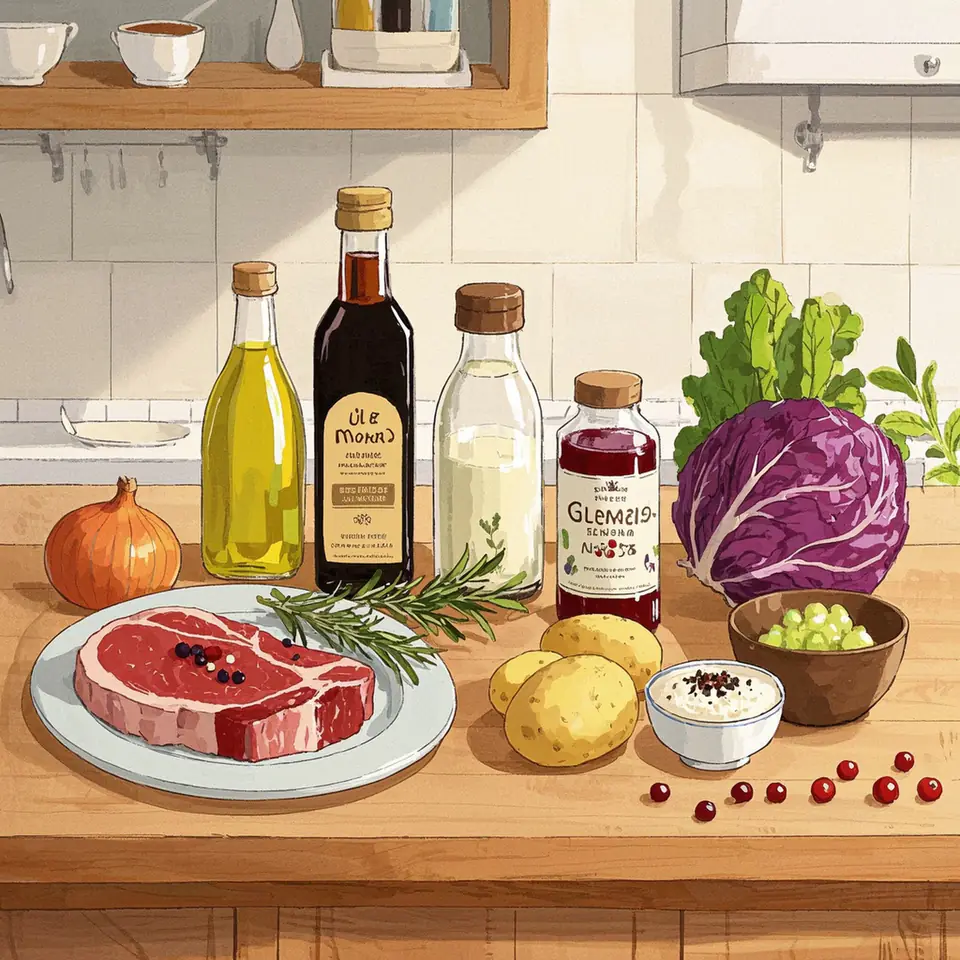
Hearty Steak and Potatoes with Balsamic-Cranberry Pan Sauce
Share This Recipe

Ingredients

Cooking Process
Recipe Note
Flavor + context before you cook
""
Steps
Wash and dry all the produce. Preheat your oven to 425°F (218°C). Halve the onion, peel it, and then thinly slice it. Strip the rosemary leaves from the stems and finely chop them until you have 1 tablespoon. Discard the stems. Halve the potatoes lengthwise, and then cut them into 1 - inch - thick wedges, similar to steak fries.
Place the potatoes on a baking sheet. Drizzle a large amount of olive oil over them and add the chopped rosemary. Toss the potatoes to coat them evenly with the oil and rosemary. Season the potatoes with salt and pepper. Roast the potatoes in the preheated oven until they are lightly browned and crisp, which should take about 30 - 35 minutes.
Heat a large drizzle of oil in a medium - sized pan over medium - high heat. Add the onion and cabbage to the pan. Cook them for about 5 minutes, tossing occasionally, until they are softened. Add the mustard seeds to the pan and cook until they start to pop. Stir in the white wine vinegar, sugar, and a pinch of salt. Reduce the heat to low, cover the pan, and cook the cabbage until it is tender, which should take about 10 minutes.
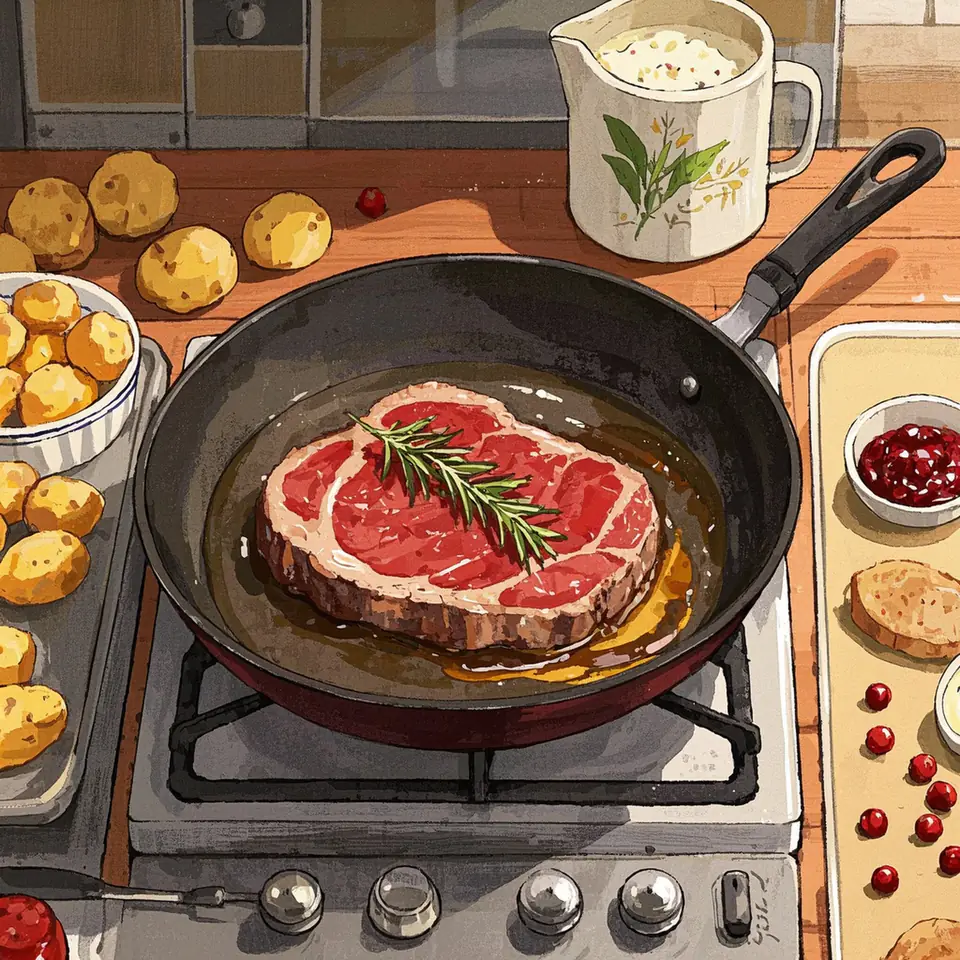
While the cabbage is cooking, heat a drizzle of oil in another medium - sized pan over medium - high heat. Pat the steak dry with a paper towel. Season the steak all over with salt and pepper. Add the steak to the hot pan and sear it until it is browned and cooked to your desired doneness. Sear each side for 4 - 7 minutes. Remove the steak from the pan and set it aside to rest.
Add ½ tablespoon of balsamic vinegar, 1½ tablespoons of soy sauce, cranberry jam, and 3 tablespoons of water to the same pan. Place the pan over medium heat. Stir the ingredients in the pan to combine them. Let the mixture simmer until it reduces to a syrupy consistency, which should take about 2 - 3 minutes. Then, remove the pan from the heat.
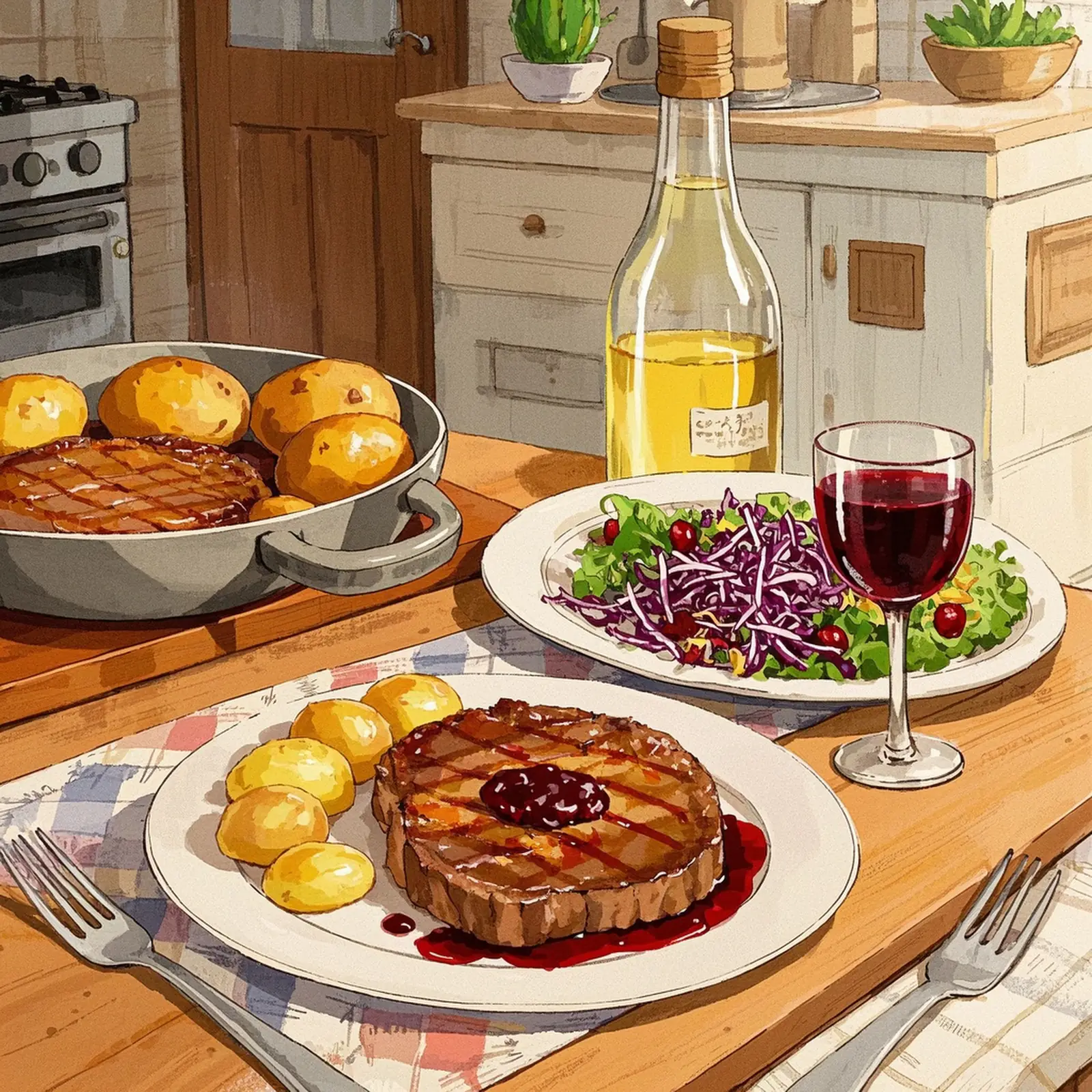
Thinly slice the steak against the grain. Divide the steak, potatoes, and cabbage between serving plates. Drizzle the glaze over the steak and serve immediately.
Nutrition
Per serving (2 servings)
535
Calories
45g
Protein
59g
Carbs
15g
Fat
840mg
Sodium
Quick Answers
Recipe at a glance
Recipe metadata
Base recipe yield
Estimated cook difficulty
Meal-type tag
Detected from ingredients + tags
Parsed from steps
Steps with timer guidance
Per base serving (if available)
FAQ
Recipe Questions
Show
FAQ
Recipe Questions
How many servings does this Hearty Steak and Potatoes recipe make?
This recipe makes 2 servings. It's designed to provide a satisfying meal for two people.
How long does it take to make this recipe?
The total time to make this recipe is about 40 minutes. This includes all the preparation and cooking steps.
What are the allergens in this recipe?
The recipe contains soy, so it's not suitable for those with soy allergies.
Can I substitute the sirloin steak with another type of steak?
While the recipe calls for sirloin steak, you can likely substitute it with other steaks like ribeye or filet mignon, adjusting cooking times as needed.
How should I store the leftovers of this dish?
Store leftovers in an airtight container in the refrigerator. Reheat in the oven or microwave, but note that the potatoes may lose some crispness.
What is the cooking time for the steak?
Sear each side of the steak for 4 - 7 minutes over medium - high heat until it reaches your desired doneness.
Substitutions
Show
Substitutions
Sirloin Steak
Ribeye Steak, New York Strip Steak, T - Bone Steak
Ribeye has more marbling, which makes it juicier and more flavorful but also higher in fat. New York Strip is leaner and has a firm texture. T - Bone offers a combination of tenderloin and strip steak. All these steaks can be cooked using similar methods, but cooking times may vary slightly depending on thickness and desired doneness.
Balsamic Vinegar
Red Wine Vinegar, Apple Cider Vinegar
Red wine vinegar has a bold, acidic flavor similar to balsamic but is less sweet. Apple cider vinegar has a milder, fruity flavor. When substituting, start with less and adjust to taste as the flavor profiles are different from balsamic vinegar.
Soy Sauce
Tamari, Liquid Aminos
Tamari is a gluten - free alternative to soy sauce with a similar umami flavor. Liquid aminos are also gluten - free, made from soybeans, and can be used as a substitute. However, they are milder in flavor, so you may need to use a bit more to achieve the same taste.
Yukon Gold Potatoes
Russet Potatoes, Red Potatoes
Russet potatoes are starchy and will become very fluffy when roasted, but they may not hold their shape as well as Yukon Golds. Red potatoes have a waxy texture, so they will be firmer and hold their shape better during roasting. Cooking times may need to be adjusted slightly depending on the potato type.
Yellow Onion
White Onion, Red Onion
White onions have a sharper, more pungent flavor compared to yellow onions. Red onions are milder and have a slightly sweet taste. They can be used interchangeably in this recipe, but red onions may add a bit of color to the dish.
White Wine Vinegar
Rice Vinegar, Lemon Juice
Rice vinegar has a mild, slightly sweet flavor and is a common substitute for white wine vinegar in Asian - inspired dishes. Lemon juice adds a bright, citrusy flavor. When using lemon juice, be aware that it has a stronger flavor, so use less and adjust to taste.
Cranberry Jam
Raspberry Jam, Strawberry Jam
Raspberry and strawberry jams will change the flavor profile of the pan sauce from cranberry to a different berry flavor. They are sweeter than cranberry jam, so you may need to reduce the amount of sugar in the recipe.
Olive Oil
Canola Oil, Avocado Oil
Canola oil has a neutral flavor and a high smoke point, making it suitable for roasting. Avocado oil also has a high smoke point and a mild flavor. Both can be used in place of olive oil for roasting the potatoes and cooking the steak and vegetables.
Storage & Reheating
Show
Storage & Reheating
Refrigerator
Store leftovers in an airtight container in the fridge for up to 3 - 4 days.
Freezer
You can freeze leftovers for up to 3 months. Ensure they're in a freezer - safe container.
Storage Tips
- • Separate the steak, potatoes, and cabbage if possible to maintain texture.
- • Let the food cool to room temperature before refrigerating or freezing.
Reheating Tips
- • For the steak, use a skillet over medium - low heat to avoid overcooking and drying it out. Add a little oil or butter to keep it moist.
- • Reheat the potatoes in the oven at 350°F (177°C) for about 10 - 15 minutes to regain some crispness. Stir halfway through.
- • Reheat the cabbage in a saucepan over low heat, cover it to retain moisture, and stir occasionally.
Safety Notes
- • Always reheat leftovers to an internal temperature of at least 165°F (74°C) to ensure safety.
- • Do not refreeze previously frozen food that has been thawed.
Troubleshooting
Show
Troubleshooting
Potatoes are undercooked and not crisp or browned after 35 minutes.
Likely cause: The oven temperature might be lower than set, or the potatoes are cut too thick.
Check the oven temperature with an oven thermometer. If it's low, increase the temperature and continue roasting the potatoes. If the potatoes are too thick, cut them into thinner wedges and roast again.
The steak is overcooked and tough.
Likely cause: The steak was seared for too long, or the heat was too high.
Next time, reduce the searing time and lower the heat. If the steak is already overcooked, you can slice it thinly and use it in a stir - fry or sandwich to make it more tender.
The cabbage is still tough after 10 minutes of covered cooking.
Likely cause: The cabbage might be old or the heat was not low enough to allow for slow cooking.
Cover the pan again and continue cooking on a lower heat until the cabbage is tender. You can also add a little more water to help steam the cabbage.
The balsamic - cranberry pan sauce is too thick and not syrupy as expected.
Likely cause: The sauce was simmered for too long or too much water evaporated.
Add a little more water to the pan and stir well. Then, simmer the sauce again for a short time until it reaches the desired syrupy consistency.
The onion and cabbage mixture burns in the pan.
Likely cause: The heat was too high or the mixture was not tossed often enough.
Immediately remove the pan from the heat. Transfer the non - burned part of the onion and cabbage to another pan and continue cooking on a lower heat, tossing more frequently.
The steak has a bland taste.
Likely cause: Not enough salt and pepper were used for seasoning, or the steak was not seared properly to lock in flavors.
Make a simple seasoning blend of salt, pepper, and a bit of garlic powder. Rub the blend on the sliced steak. You can also drizzle a little extra sauce over the steak to enhance the flavor.