CIOPPINO
Share This Recipe

Ingredients

Cooking Process
Steps
Place a large pot on the stove and heat the oil over medium heat.
Add the fennel, onion, shallots, and a pinch of salt to the pot. Sauté these vegetables until they become translucent, which should take about 10 minutes.
Add the garlic and red pepper flakes to the pot. Cook for 2 minutes, allowing the flavors to meld.
Add the tomato paste, crushed tomatoes, wine (or stock and vinegar), stock, water, and bay leaf to the pot.
Cover the pot with a lid and bring the mixture to a simmer.
Reduce the heat to medium - low to maintain a gentle simmer.
Cover the pot again and let the soup simmer for about 30 minutes, allowing the flavors to develop.
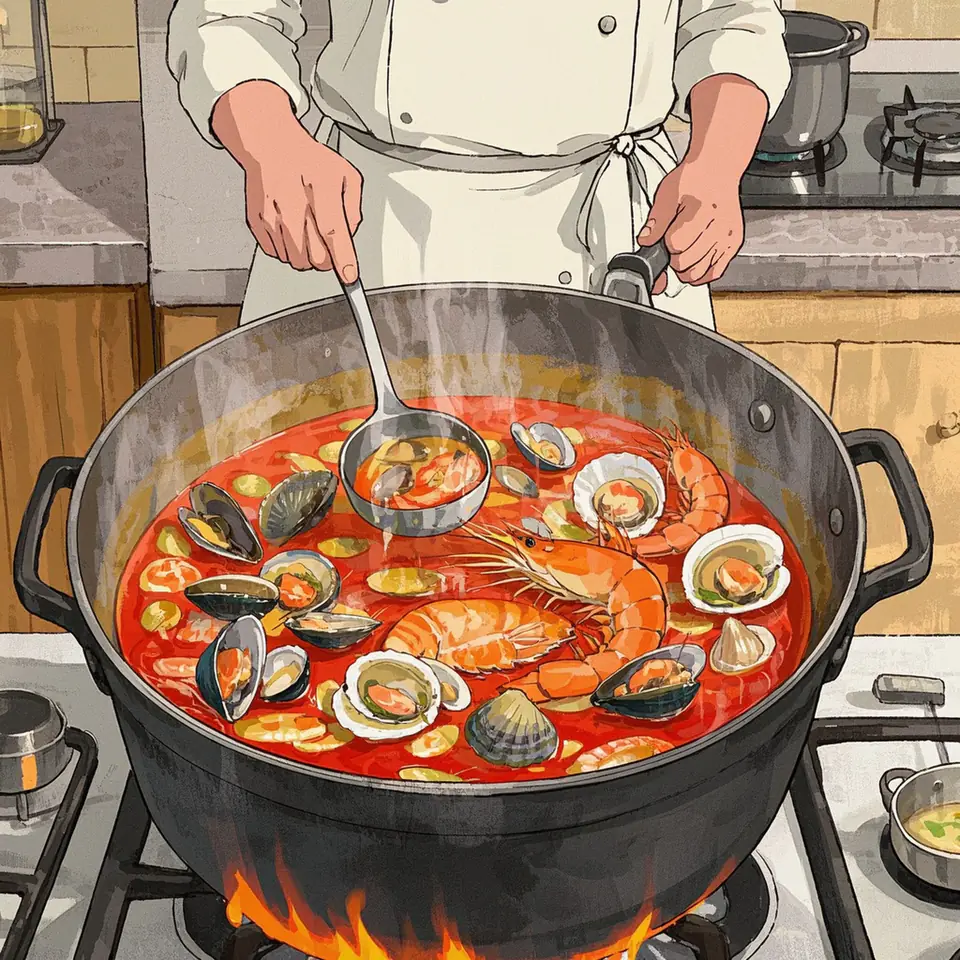
Add the clams and mussels to the pot.
Cover the pot and cook the clams and mussels until they begin to open, which should take about 2 minutes.
Turn up the heat slightly to maintain a gentle simmer. Stir the soup gently and continue cooking until the fish and shrimp are barely cooked through and the clams are completely open. This should take about 4 - 5 more minutes.
Go through the soup and discard any clams and mussels that did not open.
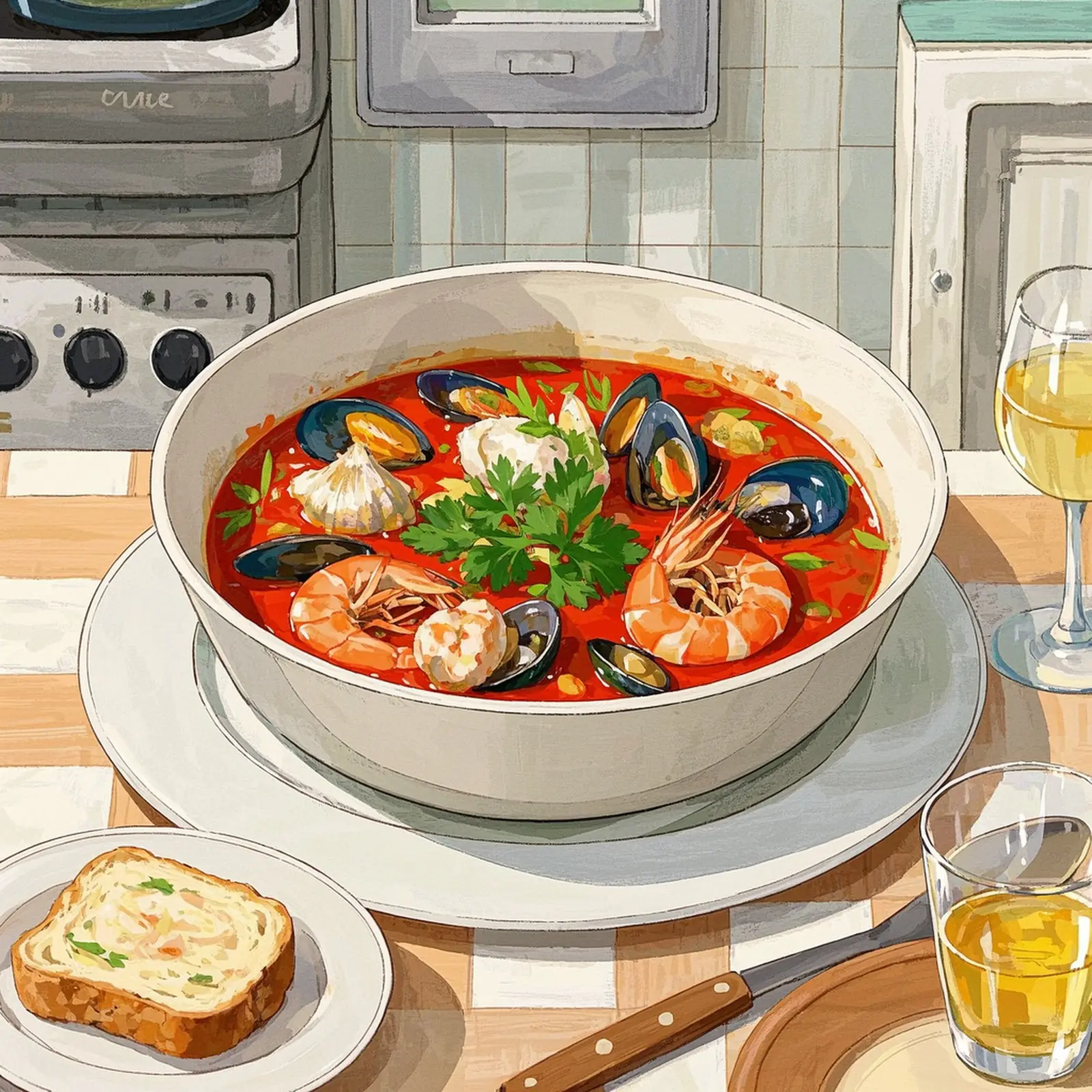
To serve, ladle the cioppino soup into bowls. Sprinkle parsley and 1/4 cup fennel fronds over the soup as a garnish.
Nutrition
Per serving (2 servings)
117
Calories
13g
Protein
6g
Carbs
3g
Fat
229mg
Sodium
Quick Answers
Recipe at a glance
Recipe metadata
Base recipe yield
Estimated cook difficulty
Tag-based classification
Meal-type tag
Detected from ingredients + tags
Steps with timer guidance
Per base serving (if available)
FAQ
Recipe Questions
Show
FAQ
Recipe Questions
How many servings does this cioppino recipe make?
This recipe makes 6 servings. It's a great quantity for a small gathering or family dinner.
How long does it take to make this cioppino?
The total time to make this cioppino is about 90 minutes, which includes prep and cooking time.
What are the allergens in this cioppino recipe?
The allergens in this recipe are fish and shellfish. Be cautious if you have allergies to these ingredients.
Can I substitute the dry white wine in this recipe?
The recipe mentions you can use stock and vinegar as a substitute for the dry white wine.
What is the difficulty level of this cioppino recipe?
The difficulty level of this recipe is medium, suitable for those with some cooking experience.
Substitutions
Show
Substitutions
extra virgin olive oil
canola oil, vegetable oil
Canola and vegetable oils have a more neutral flavor compared to the fruity taste of extra virgin olive oil. They also have a higher smoke point, which can be useful if you accidentally overheat the pan.
fennel bulb
celery
Celery has a different flavor profile than fennel, being more savory and less anise - like. It also has a crunchier texture. You may need to adjust the cooking time slightly as celery can take a bit longer to soften.
sweet onion
yellow onion
Yellow onions are more pungent than sweet onions. They will add a stronger flavor to the dish. You may want to cook them a bit longer to mellow their flavor.
shallot
red onion
Red onion has a sharper and more intense flavor than shallots. It can be substituted in a 1:1 ratio, but consider chopping it finer to distribute the flavor more evenly.
dry white wine
chicken stock and a splash of white vinegar
This substitution will change the flavor profile as the wine imparts a distinct taste. The chicken stock provides a savory base, and the vinegar adds a bit of acidity. Adjust the amount of vinegar according to your taste.
fish stock
chicken stock
Chicken stock has a different flavor from fish stock, being more poultry - forward. It will still work well in the cioppino but will change the overall taste of the dish.
clams
scallops
Scallops have a sweeter and more delicate flavor compared to clams. They also cook very quickly, so you'll need to add them later in the cooking process to avoid overcooking.
firm white fish
cod
Cod is a common firm white fish and can be substituted in a 1:1 ratio. It has a similar texture and flavor to haddock, so it will work well in this recipe.
Storage & Reheating
Show
Storage & Reheating
Refrigerator
Store leftover cioppino in an airtight container in the fridge for 3-4 days.
Freezer
You can freeze cioppino for up to 3 months. Ensure it's in a freezer - safe container.
Storage Tips
- • Let the cioppino cool to room temperature before refrigerating or freezing to prevent spoilage.
- • Label the container with the date to keep track of storage time.
Reheating Tips
- • Reheat cioppino on the stovetop over low - medium heat, stirring occasionally to avoid burning and ensure even heating.
- • If the soup seems too thick after reheating, add a little water or fish stock to reach the desired consistency.
Safety Notes
- • Discard any clams or mussels that did not open during cooking, as they may be unsafe to eat.
- • Always reheat the cioppino to a boiling point to ensure it's safe for consumption.
Troubleshooting
Show
Troubleshooting
The fennel, onion, and shallots are burned during sautéing.
Likely cause: The heat was set too high or the vegetables were not stirred frequently enough.
Reduce the heat to medium - low. Stir the vegetables more often to ensure even cooking. If the vegetables are slightly burned, remove them from the pot, add a bit more oil, and start with fresh vegetables.
The soup is too thick after simmering for 30 minutes.
Likely cause: Too much liquid evaporated during the simmering process, or not enough liquid was added initially.
Add more fish stock or water to the pot, a little at a time, and continue simmering for a few more minutes until the desired consistency is reached.
The clams and mussels do not open after cooking for 2 minutes.
Likely cause: The heat is too low, or some of the shellfish were dead before cooking.
Increase the heat slightly and continue cooking for another 1 - 2 minutes. If some still do not open, discard them as they may not be safe to eat.
The fish and shrimp are overcooked and tough.
Likely cause: The cooking time in step 10 was exceeded, or the heat was too high.
Remove the overcooked fish and shrimp from the pot. Add fresh, uncooked fish and shrimp and cook for a shorter time, closely monitoring their doneness.
The soup tastes bland.
Likely cause: Not enough salt, red pepper flakes, or other seasonings were added, or the simmering time was not long enough for the flavors to develop.
Add a little more fine sea salt, red pepper flakes, or other seasonings to taste. Let the soup simmer for an additional 5 - 10 minutes to allow the new flavors to meld.
The tomato paste is clumpy in the soup.
Likely cause: The tomato paste was not properly incorporated into the mixture when added.
Use a whisk or a wooden spoon to vigorously stir the soup until the tomato paste is fully dissolved and evenly distributed.