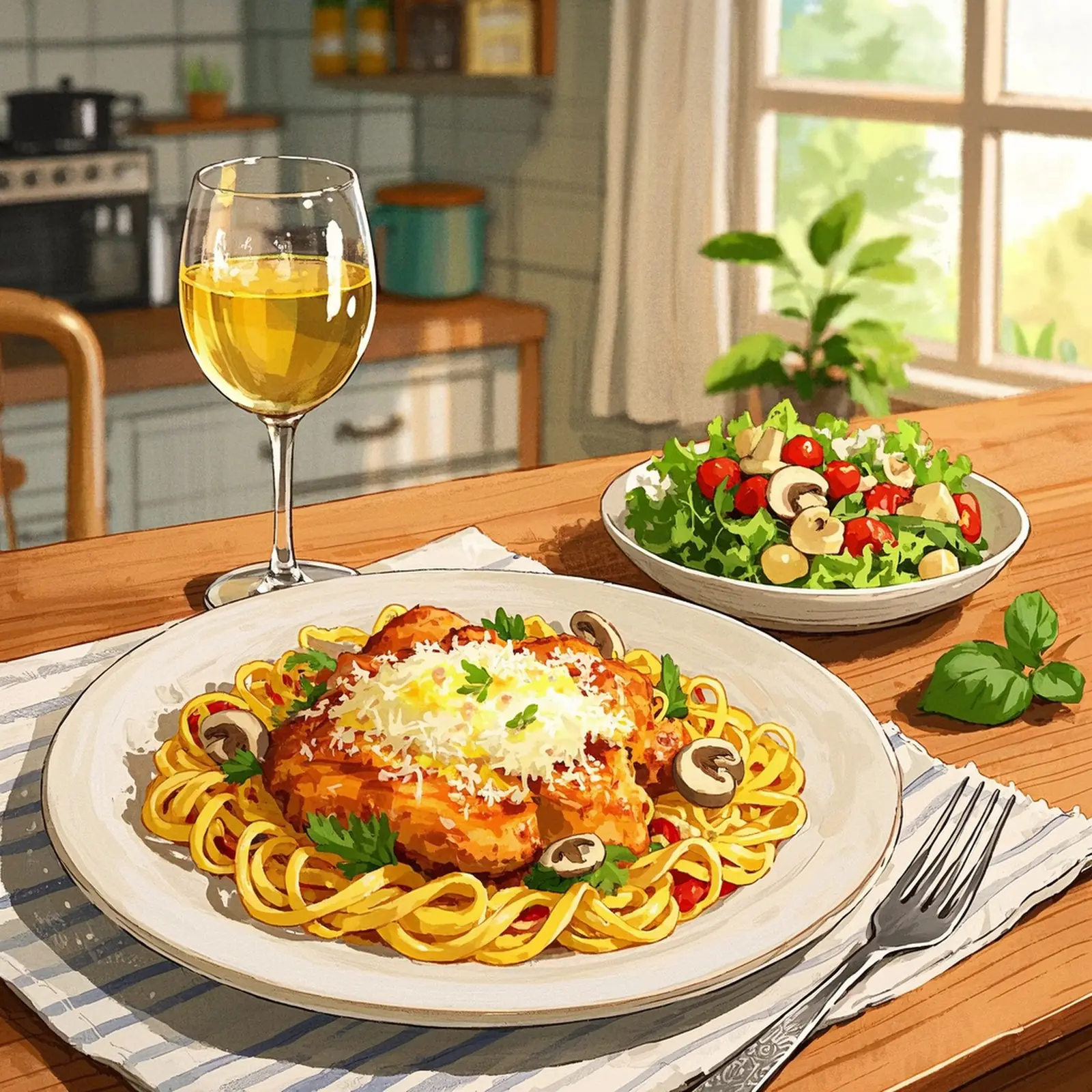
Chicken Tetrazzini
Share This Recipe
Recipe Note
Flavor + context before you cook
""
Steps
Preheat the oven to 375°F.
Add some cooking spray to a large non - stick pan or Dutch oven.
Preheat the pan or Dutch oven over medium heat.
Add onions and sliced mushrooms to the pan. Cook for about 8 minutes, until the onions and mushrooms are tender.
Reduce the heat to medium - low.
Add the garlic to the pan and cook for another minute.
Add the butter to the pan, leaving the mushrooms, garlic, and onions in there. Let the butter melt.
Sprinkle the flour into the pan and stir for about 30 seconds to incorporate it.
Add the wine to the pan. Use a wooden spoon to deglaze the pan, scraping up the brown bits and mixing in the flour.
Add chicken stock, milk, salt, and pepper to the pan. Stir to incorporate the ingredients.
Bring the mixture to a simmer. Stir the mixture almost continuously to avoid scorching. The sauce will thicken in 1 to 2 minutes.
Turn off the stove and remove the pan from the heat.
Add 1 cup of parmesan cheese to the pan and stir to incorporate it.
Toss the sauce with the cooked shredded chicken and cooked, drained linguini pasta.
Spray a casserole dish with cooking spray to prevent sticking.
Transfer the chicken and pasta mixture to the prepared casserole dish.
Sprinkle an extra 1/2 cup of parmesan cheese on top of the mixture in the casserole dish.
Bake the casserole at 375°F for about 15 to 20 minutes, until the cheese on top is melted.
Remove the casserole from the oven and let it sit for about 5 minutes. Then serve and enjoy!
Nutrition
Per serving (2 servings)
458
Calories
32g
Protein
36g
Carbs
17g
Fat
746mg
Sodium
Quick Answers
Recipe at a glance
Recipe metadata
Estimated cook difficulty
Tag-based classification
Meal-type tag
Detected from ingredients + tags
Parsed from steps
Steps with timer guidance
Per base serving (if available)
FAQ
Recipe Questions
Show
FAQ
Recipe Questions
How long does it take to make Chicken Tetrazzini?
It takes about 40 minutes in total, with 20 minutes of prep time and 20 minutes of cook time.
What are the allergens in Chicken Tetrazzini?
The allergens in this recipe are dairy and wheat/gluten.
Can I substitute the dry white wine in the recipe?
The recipe doesn't mention a substitution, but a common alternative for white wine in cooking is chicken broth.
What temperature should I bake the Chicken Tetrazzini at?
Bake the casserole at 375°F for about 15 to 20 minutes until the cheese on top is melted.
How difficult is it to make Chicken Tetrazzini?
The difficulty level of this recipe is medium.
What is the nutrition information for Chicken Tetrazzini?
It has 458 kcal, 17 g of fat, 36 g of carbs, 1 g of fiber, 4 g of sugar, and 32 g of protein.
Substitutions
Show
Substitutions
linguine pasta
spaghetti, fettuccine, penne
Spaghetti has a similar thin shape and texture, while fettuccine is wider and flatter, which may hold the sauce differently. Penne has a tubular shape and a larger surface area for sauce adhesion. Cooking times may vary slightly according to the package instructions of each pasta type.
crimini mushrooms
white button mushrooms, shiitake mushrooms
White button mushrooms have a milder flavor compared to crimini. Shiitake mushrooms have a more intense, earthy flavor. If using shiitake, remove the tough stems before cooking. The texture of all three types is similar, but shiitake may be slightly chewier.
yellow onion
white onion, sweet onion
White onions have a sharper, more pungent flavor, while sweet onions (such as Vidalia) are milder and sweeter. The cooking time will be the same, but the final flavor of the dish will vary slightly.
butter
margarine, olive oil
Margarine can be used as a 1:1 substitute for butter. It has a similar consistency and melting point. Olive oil has a different flavor profile, more fruity and earthy. When using olive oil, reduce the amount slightly as it is more concentrated in flavor. It may also change the texture of the sauce slightly.
chicken stock
vegetable stock, beef stock
Vegetable stock is a good option for a vegetarian version of this dish. It will give a lighter, more vegetable - forward flavor. Beef stock will add a richer, meatier flavor. However, it will change the overall flavor profile of the Italian - style casserole.
milk
almond milk, soy milk
Almond milk is thinner and has a nutty flavor, while soy milk is thicker and has a more neutral taste. Both are suitable for lactose - intolerant people. The sauce may not thicken as well with non - dairy milks, so you may need to adjust the amount of flour slightly.
dry white wine
chicken broth, apple cider vinegar diluted with water
Chicken broth will add a savory flavor similar to the wine but without the acidity. Apple cider vinegar diluted with water can mimic the acidity of the wine. However, it may add a slightly fruity undertone to the dish. Use about half the amount of vinegar as you would wine, then top up with water.
parmesan cheese
romano cheese, asiago cheese
Romano cheese is similar to parmesan but has a saltier and more intense flavor. Asiago cheese is milder and creamier. Both can be used as substitutes in equal amounts, but the final flavor of the dish will be slightly different.
Storage & Reheating
Show
Storage & Reheating
Refrigerator
Store chicken tetrazzini in an airtight container in the fridge for 3 - 4 days.
Freezer
Freeze the casserole in a freezer - safe container for up to 3 months.
Storage Tips
- • Let the chicken tetrazzini cool completely before storing to prevent condensation and spoilage.
- • Label the container with the date of storage.
Reheating Tips
- • Oven: Preheat to 350°F, cover the casserole with foil, and heat for about 20 - 25 minutes until heated through. This helps prevent the top from drying out.
- • Microwave: Place the casserole in a microwave - safe dish, cover with a microwave - safe lid or plastic wrap with a vent, and heat in 1 - 2 minute intervals, stirring in between, until heated through.
Safety Notes
- • Ensure the chicken tetrazzini reaches an internal temperature of 165°F when reheating to avoid foodborne illnesses.
Troubleshooting
Show
Troubleshooting
Onions and mushrooms are not tender after 8 minutes of cooking
Likely cause: The heat was too low, or the pieces were cut too large
Increase the heat slightly and continue cooking until the onions and mushrooms reach the desired tenderness. If the pieces are large, cut them into smaller, more uniform pieces next time.
Garlic burns while cooking
Likely cause: The heat was too high, or the garlic was left in the pan too long
Immediately remove the pan from the heat and transfer the garlic to a separate bowl. Reduce the heat and continue with the recipe. Next time, keep a closer eye on the garlic and reduce the cooking time if necessary.
Flour forms lumps in the sauce
Likely cause: The flour was not stirred in thoroughly or was added too quickly
Use a whisk to break up the lumps and continue stirring until the flour is fully incorporated. To prevent lumps in the future, add the flour slowly while whisking constantly.
The sauce does not thicken
Likely cause: Insufficient flour was used, or the sauce did not simmer long enough
Mix a small amount of additional flour with a little cold water to form a slurry. Stir the slurry into the sauce and continue simmering until it thickens. If the sauce has not simmered long enough, keep simmering and stirring for a few more minutes.
The sauce scorches on the bottom of the pan
Likely cause: The heat was too high, or the sauce was not stirred frequently enough
Immediately remove the pan from the heat and transfer the sauce to a new pan. Reduce the heat and stir the sauce more frequently to prevent scorching in the future.
The cheese on top of the casserole does not melt after 20 minutes of baking
Likely cause: The oven temperature was too low, or the cheese was too thickly layered
Increase the oven temperature by 25°F and continue baking for a few more minutes until the cheese melts. Next time, make sure the oven is preheated to the correct temperature and spread the cheese evenly in a thinner layer.
The casserole is dry after baking
Likely cause: The pasta was overcooked, or the sauce was too thick
Add a little more chicken stock or milk to the casserole and stir gently to moisten it. If the pasta is overcooked, try cooking it for a shorter time next time. If the sauce is too thick, add a little more liquid before tossing it with the chicken and pasta.