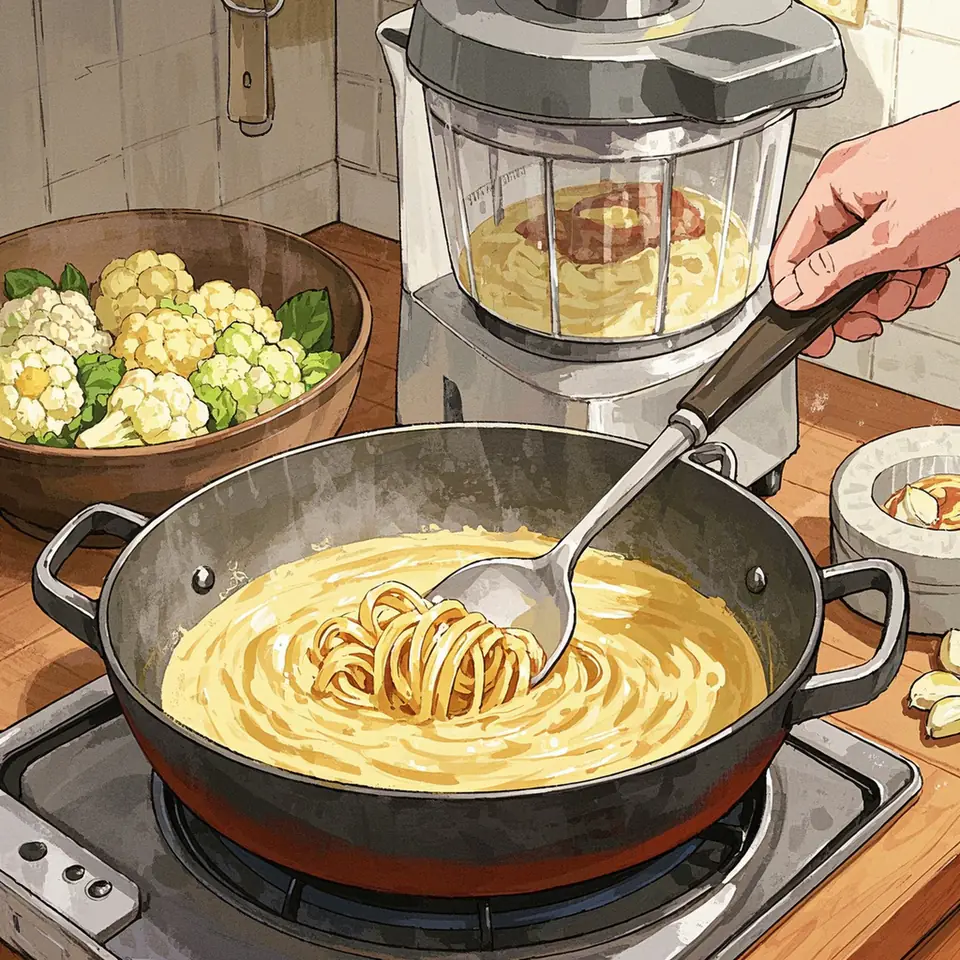
CAULIFLOWER ALFREDO
Share This Recipe

Ingredients

Cooking Process
Recipe Note
Flavor + context before you cook
""
Steps
Fill a large pot with water and bring it to a boil. Add the pasta to the boiling water and cook it according to the package instructions.
Once the pasta is cooked, turn off the heat. Drain the pasta, but keep 1 cup of the pasta water. Put the drained pasta back into the pot.
Stir a drizzle of olive oil into the pasta in the pot to prevent it from sticking. Then cover the pot with a lid.
While the pasta is cooking, steam the cauliflower florets. Steam them until they are soft, which should take about 15 minutes.
Place a large skillet over medium heat and add oil to it. Then add the garlic to the skillet and cook it until it becomes fragrant, about 1 minute.
Let the cauliflower cool. Then combine the cooled cauliflower, the cooked garlic, whole milk, Parmesan, salt, pepper, and red pepper flakes in a food processor or a large blender.
If the sauce in the food processor or blender is too thick, add the reserved pasta water, 1 tablespoon at a time.
Set the heat to low. Add the sauce to the cooked pasta in the pot and toss the pasta until it is fully coated with the sauce.
Remove the pot from the heat. Garnish the pasta with parsley and serve it immediately.
Nutrition
Per serving (2 servings)
94
Calories
3g
Protein
16g
Carbs
2g
Fat
37mg
Sodium
Quick Answers
Recipe at a glance
Recipe metadata
Base recipe yield
Estimated cook difficulty
Tag-based classification
Meal-type tag
Detected from ingredients + tags
Steps with timer guidance
Per base serving (if available)
FAQ
Recipe Questions
Show
FAQ
Recipe Questions
How many servings does this cauliflower alfredo recipe make?
This recipe makes 6 servings.
How long does it take to steam the cauliflower?
It takes about 15 minutes to steam the cauliflower until it's soft.
What are the allergens in this cauliflower alfredo?
The allergens in this recipe are dairy and wheat/gluten.
Can I substitute the whole grain pasta?
Yes, you can use legume - based pasta as an alternative.
How difficult is this recipe?
This recipe has an easy difficulty level with high confidence.
What's the total time to make this recipe?
The total time to make this recipe is 45 minutes.
Substitutions
Show
Substitutions
whole grain or legume-based pasta
brown rice pasta, quinoa pasta, corn pasta
These alternatives are gluten - free. Brown rice pasta has a slightly nutty flavor, quinoa pasta is protein - rich, and corn pasta has a mild, sweet taste. They may have different cook - times, so follow the package instructions.
cauliflower
broccoli, kale
Broccoli has a similar texture and cooking time to cauliflower. Kale is a bit tougher and may need to be steamed for a bit longer. Both will change the flavor slightly, with broccoli being more similar to cauliflower and kale having a stronger, earthy taste.
extra virgin olive oil
avocado oil, coconut oil
Avocado oil has a high smoke point and a mild flavor, similar to olive oil. Coconut oil has a distinct tropical flavor, which may change the overall taste of the dish. Use refined coconut oil for a more neutral flavor.
garlic
shallots, onions
Shallots have a milder and sweeter flavor compared to garlic. Onions are stronger in flavor. You may need to adjust the quantity; use about half as much shallots as garlic and a bit more onion to achieve a similar flavor intensity.
whole milk
almond milk, soy milk, oat milk
These non - dairy milk alternatives are suitable for lactose - intolerant people. Almond milk is thin and has a nutty flavor, soy milk is protein - rich and has a more neutral taste, and oat milk is creamy. They may affect the thickness of the sauce, so you might need to adjust the amount of pasta water added.
Parmesan cheese
Pecorino Romano, Grana Padano
Pecorino Romano is saltier and has a sharper flavor than Parmesan. Grana Padano is milder and creamier. Both are Italian hard cheeses and can be used as substitutes in similar quantities.
fresh parsley
cilantro, basil
Cilantro has a bright, citrusy flavor that can be a bold alternative. Basil has a sweet, slightly spicy taste. Both will change the overall flavor profile of the dish's garnish.
Storage & Reheating
Show
Storage & Reheating
Refrigerator
Store the cauliflower alfredo pasta in an airtight container in the fridge for 3 - 5 days.
Freezer
You can freeze the pasta in a freezer - safe container for up to 2 months.
Storage Tips
- • Ensure the container is airtight to prevent the pasta from drying out and absorbing other fridge odors.
Reheating Tips
- • Reheat in the microwave in short intervals, stirring in between to avoid uneven heating and to prevent the sauce from drying out. If using the stovetop, add a splash of milk or pasta water to keep the sauce creamy and heat over low - medium heat, stirring constantly.
Safety Notes
- • Always make sure the pasta is heated to an internal temperature that kills harmful bacteria before consuming. Do not refreeze previously frozen pasta.
Troubleshooting
Show
Troubleshooting
Pasta is overcooked and mushy
Likely cause: The pasta was cooked for longer than the package instructions or the water was boiling too vigorously.
Next time, set a timer according to the package instructions and check the pasta a minute or two before the recommended time. If the pasta is already overcooked, drain it immediately and run it under cold water to stop the cooking process. Then, use it in the recipe as normal, but be aware that the texture will be softer.
Pasta is undercooked and hard in the center
Likely cause: The pasta was not cooked long enough or the water did not reach a proper boil before adding the pasta.
Return the undercooked pasta to the pot with some fresh boiling water and continue cooking for a few more minutes, checking frequently until it reaches the desired doneness.
Cauliflower is still hard after steaming
Likely cause: The cauliflower was not steamed for the full 15 minutes or the steam was not hot enough.
Place the hard cauliflower back in the steamer and continue steaming for a few more minutes until it is soft. Make sure the water in the steamer is boiling vigorously to produce enough steam.
Garlic is burnt
Likely cause: The heat was too high when cooking the garlic or it was cooked for longer than 1 minute.
Remove the burnt garlic from the skillet and start over with fresh garlic. Lower the heat to medium - low and cook the new garlic more carefully, watching it closely to prevent burning.
Sauce is too thick and won't blend well
Likely cause: The cauliflower was not soft enough or not enough pasta water was added.
Add the reserved pasta water to the food processor or blender, 1 tablespoon at a time, and blend until the sauce reaches the desired consistency.
Sauce is too thin and lacks flavor
Likely cause: Too much pasta water was added or the seasonings were not well - incorporated.
If the sauce is too thin, transfer it to a skillet and cook it over low heat for a few minutes to reduce the liquid. You can also add a little more Parmesan cheese and seasonings to enhance the flavor.
Pasta sticks together
Likely cause: Not enough olive oil was added to the pasta after draining or the pasta was left sitting for too long without being tossed.
Add a little more olive oil to the pot with the pasta and toss it well to separate the strands. If the pasta has cooled down, you can briefly re - heat it over low heat while tossing.