Caldo de Res
Share This Recipe

Ingredients

Cooking Process
Recipe Note
Flavor + context before you cook
""
Steps
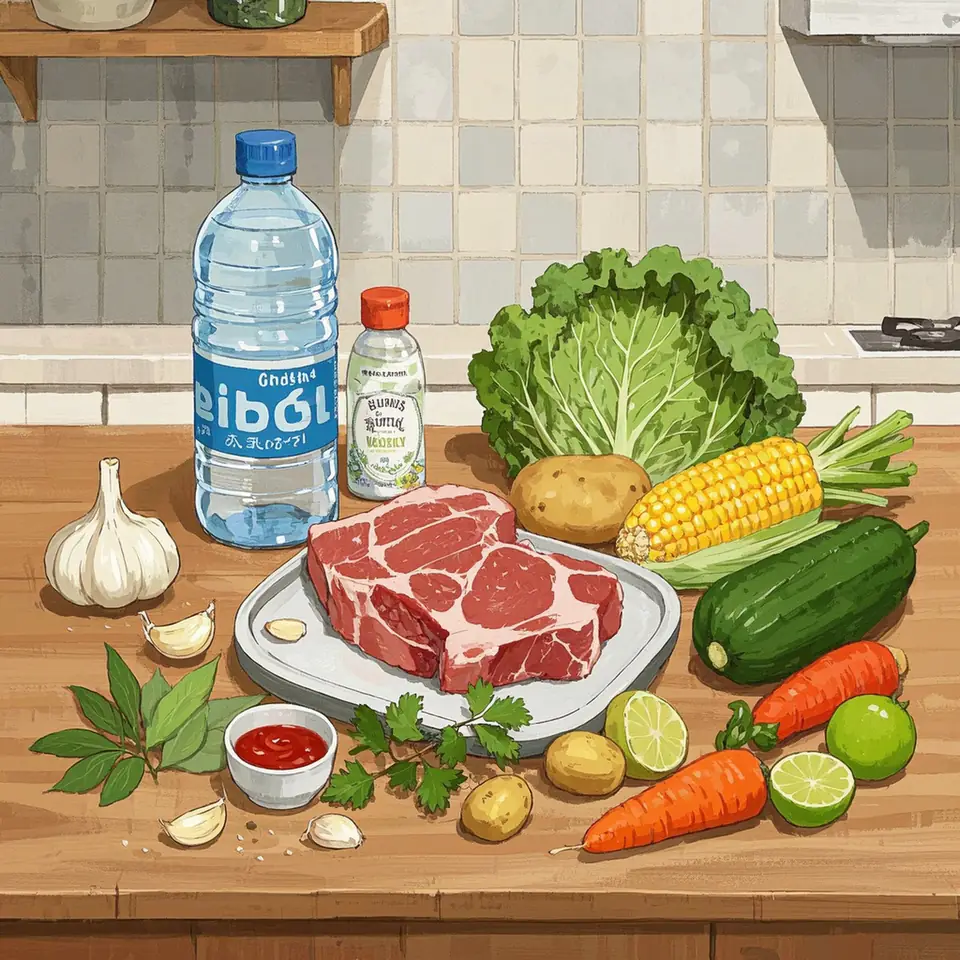
Take a large pot or Dutch oven. Add water, beef shanks, garlic, bay leaves, and salt to it. Place the pot over high heat and bring the contents to a boil. Once boiling, cover the pot, reduce the heat to low, and let it simmer for 1 ½ to 2 hours, until the meat becomes tender.
Using a spoon, skim off any white or brown foam floating on the surface of the pot. Discard the foam, along with the bay leaves and garlic cloves. Transfer the cooked bone - in beef shank to a bowl and set it aside to cool slightly.
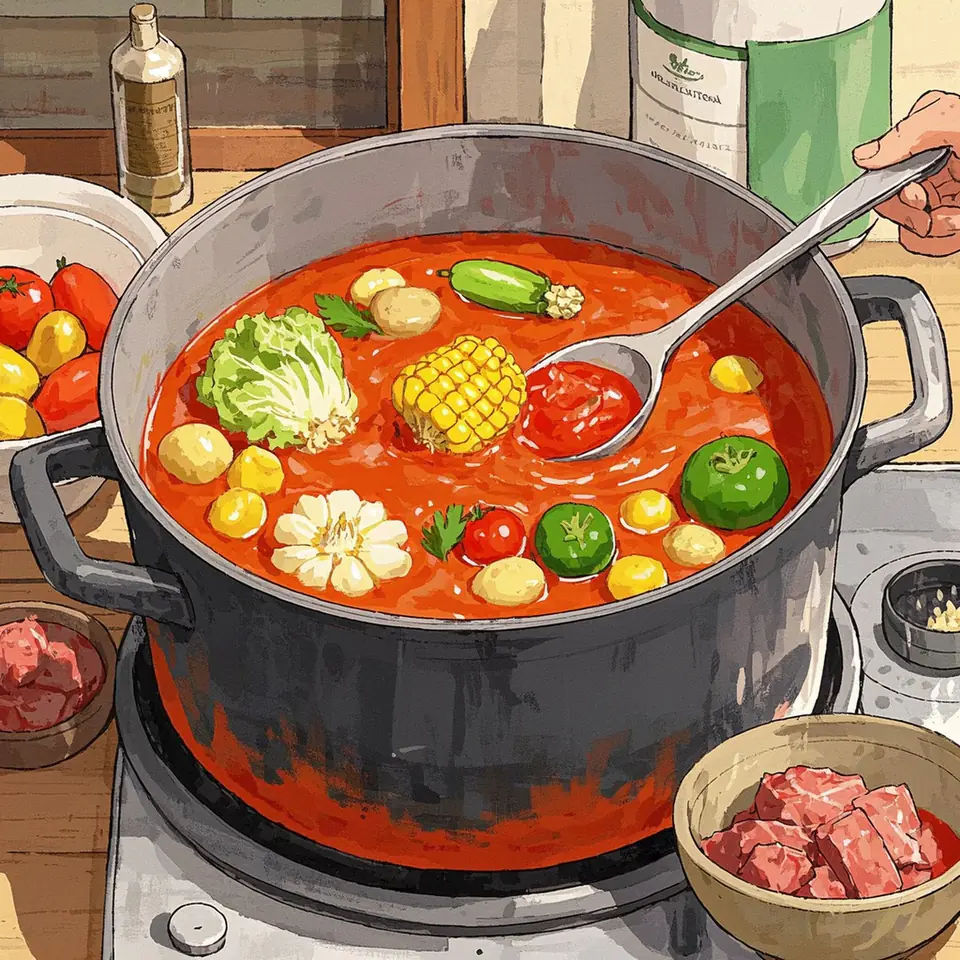
Add carrots, corn, potatoes, zucchini, cabbage, cilantro, and tomato paste to the pot. Stir the ingredients well until the tomato paste has fully dissolved. Place the pot over high heat and bring the soup to a boil. Once boiling, reduce the heat to low and simmer for 15 - 20 minutes, until all the vegetables are tender and cooked through.
While the vegetables are cooking, take the cooled beef shank. Remove the bones and any tough sinewy pieces from the beef shank and discard them. Cut the tender meat into small bite - sized chunks. Once the vegetables are fully cooked, add the meat chunks back into the pot.
Use a spoon to stir all the ingredients in the pot together. Take a small taste of the soup. If needed, season the soup with more salt.
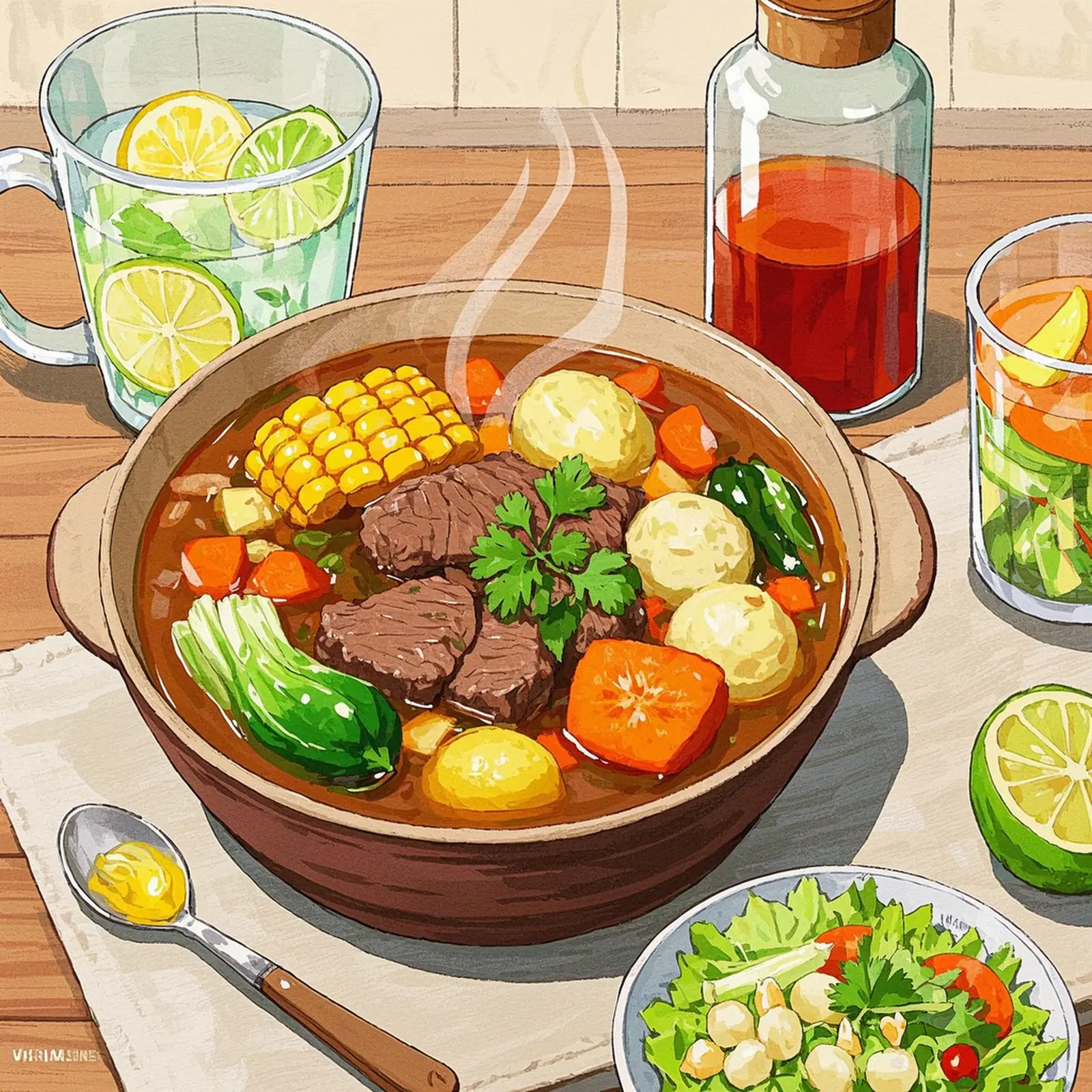
Ladle the soup into large bowls, making sure that each bowl contains a little bit of all the ingredients. Top each bowl with more fresh cilantro, freshly squeezed lime juice, and a few dashes of hot sauce if you'd like.
Nutrition
Per serving (2 servings)
138
Calories
14g
Protein
15g
Carbs
3g
Fat
69mg
Sodium
Quick Answers
Recipe at a glance
Recipe metadata
Base recipe yield
Estimated cook difficulty
Tag-based classification
Meal-type tag
Detected from ingredients + tags
Steps with timer guidance
Per base serving (if available)
FAQ
Recipe Questions
Show
FAQ
Recipe Questions
How long does it take to make Caldo de Res?
It takes about 180 minutes in total, including 30 minutes of prep time and 120 minutes of cooking time.
How many servings does this Caldo de Res recipe make?
The recipe makes 4 servings.
What are the allergens in Caldo de Res?
The known allergen in this recipe is dairy.
Can I substitute the beef shank in this recipe?
There's no substitution information provided. You can explore other beef cuts with similar texture and flavor.
How do I store leftover Caldo de Res?
Storage details are not given. Generally, you can store it in an airtight container in the fridge.
What's the difficulty level of making Caldo de Res?
The difficulty level of this recipe is rated as medium.
Substitutions
Show
Substitutions
bone - in beef shank
beef chuck roast, beef brisket
Beef chuck roast and brisket are also tough cuts that become tender when slow - cooked, similar to beef shank. However, they may have a slightly different texture and flavor. Beef chuck roast is leaner, while brisket has more fat, which can add richness to the soup.
garlic
onion powder, garlic powder
Onion powder can add a similar savory flavor to the soup, but it has a milder and sweeter taste compared to garlic. Garlic powder is a more direct substitute, but it may lack the fresh, pungent flavor of fresh garlic. Use about 1/2 teaspoon of powder for each clove of garlic.
carrot
sweet potato, parsnip
Sweet potatoes are sweeter and have a softer texture when cooked. Parsnips have a similar shape and texture to carrots but with a slightly nutty flavor. They can be used in the same quantity as carrots.
corn
frozen corn kernels, canned corn
Frozen and canned corn are convenient alternatives. Frozen corn retains more of the fresh flavor, while canned corn is already cooked. Adjust the cooking time if using canned corn as it may over - cook if simmered for too long.
potato
sweet potato, yuca
Sweet potatoes add a sweet flavor and a softer texture. Yuca, also known as cassava, has a starchy texture similar to potatoes but with a slightly different flavor. It may take a bit longer to cook than regular potatoes.
zucchini
yellow squash, eggplant
Yellow squash has a similar texture and flavor to zucchini. Eggplant has a denser texture and a more earthy flavor. Cut eggplant into similar - sized chunks and be aware that it may absorb more liquid during cooking.
green cabbage
napa cabbage, savoy cabbage
Napa cabbage is sweeter and has a more delicate texture. Savoy cabbage has a crinkled leaf and a slightly sweeter flavor compared to green cabbage. They can be used in the same quantity and preparation method.
tomato paste
tomato sauce, crushed tomatoes
Tomato sauce is thinner than tomato paste, so you may need to reduce the amount of water in the recipe. Crushed tomatoes have a chunkier texture. If using crushed tomatoes, you may need to puree them slightly to achieve a similar consistency to tomato paste.
Storage & Reheating
Show
Storage & Reheating
Refrigerator
Store Caldo de Res in an airtight container in the fridge for 3 - 4 days.
Freezer
Freeze the soup in a freezer - safe container for up to 3 months.
Storage Tips
- • Let the soup cool to room temperature before refrigerating or freezing to prevent spoilage.
- • Label the container with the date of storage.
Reheating Tips
- • Reheat the soup on the stovetop over medium - low heat, stirring occasionally to prevent burning and ensure even heating.
- • If the soup has thickened in the fridge, add a little water or broth to reach the desired consistency.
Safety Notes
- • Always ensure the soup is heated to a safe internal temperature throughout before consuming.
Troubleshooting
Show
Troubleshooting
Beef shanks are tough and not tender after simmering for 2 hours
Likely cause: The beef shanks were cooked at too high a heat, or the simmering time was insufficient. The quality of the beef shanks might also be poor.
Cover the pot again, reduce the heat to the lowest setting, and continue simmering for an additional 30 - 60 minutes, checking the tenderness of the meat periodically.
There is a lot of foam remaining in the soup after skimming
Likely cause: The skimming process was not thorough enough, or the beef shanks released more impurities than expected.
Use a fine - mesh skimmer to carefully remove the remaining foam. You can also let the soup sit for a few minutes to allow the foam to rise to the surface before skimming again.
Vegetables are undercooked after 20 minutes of simmering
Likely cause: The vegetables were cut into larger pieces than recommended, or the heat was too low during the simmering process.
Cover the pot and continue simmering for an additional 5 - 10 minutes, checking the vegetables' doneness frequently.
Vegetables are overcooked and mushy
Likely cause: The vegetables were simmered for too long, or the heat was too high.
Remove the pot from the heat immediately. If the soup is too thick, you can add a little more water to thin it out. You can also fish out the overly mushy vegetables and add some fresh, raw vegetables that are quickly cooked, like thinly sliced zucchini or shredded cabbage, and let them sit in the hot soup for a few minutes to warm through.
The soup tastes bland
Likely cause: Insufficient salt was added, or the tomato paste did not dissolve well, resulting in a lack of flavor.
Taste the soup again and gradually add more kosher salt, a little at a time, until the desired flavor is achieved. You can also add a bit more tomato paste to enhance the umami flavor and stir well to dissolve it.
The soup is boiling over during the cooking process
Likely cause: The heat was set too high, or the pot was too small for the amount of ingredients.
Immediately reduce the heat to low. If the pot is too small, transfer the soup to a larger pot and continue cooking at a lower heat.