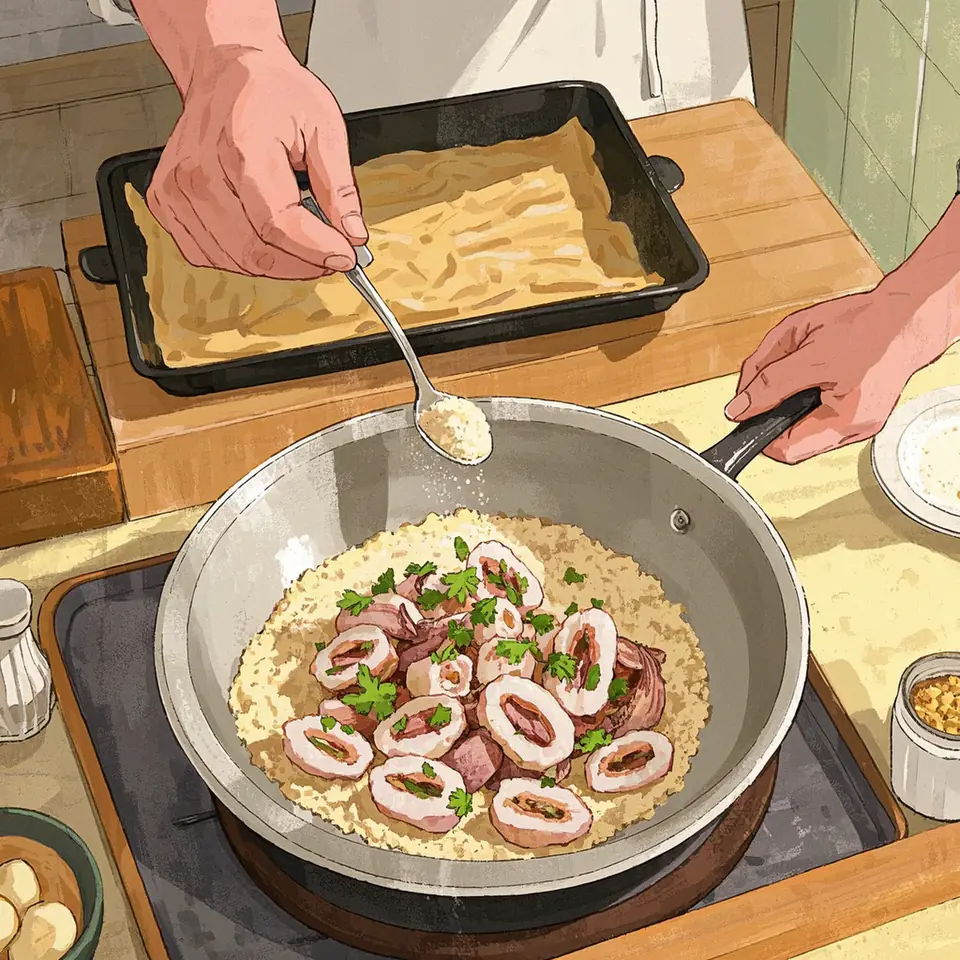
CALAMARI
Share This Recipe

Ingredients

Cooking Process
Recipe Note
Flavor + context before you cook
""
Steps
Preheat your oven to 425°F. Line a baking sheet with parchment paper.
In a large bowl, combine the cornmeal or almond meal, baking soda, parsley, salt, and pepper.
Working in a few batches, add all the calamari pieces to the bowl. Toss the calamari in the mixture until it is evenly coated.
Place the coated calamari on the prepared baking sheet. Bake for about 20 minutes, or until the calamari is golden brown and crisp.
Serve each portion of calamari with a lemon wedge and a cup of marinara sauce.
Nutrition
Per serving (2 servings)
44
Calories
4g
Protein
4g
Carbs
1g
Fat
72mg
Sodium
Quick Answers
Recipe at a glance
Recipe metadata
Base recipe yield
Estimated cook difficulty
Tag-based classification
Meal-type tag
Detected from ingredients + tags
Parsed from steps
Steps with timer guidance
Per base serving (if available)
FAQ
Recipe Questions
Show
FAQ
Recipe Questions
How many servings does this calamari recipe make?
This calamari recipe makes 6 servings. It's suitable for a small gathering or family meal.
What temperature should I preheat the oven to?
Preheat your oven to 425°F (218.3°C). This high heat helps the calamari cook quickly and get crispy.
How long do I bake the calamari?
Bake the calamari for about 20 minutes, until it's golden brown and crisp. This ensures it has the right texture.
Can I substitute the cornmeal in this recipe?
Yes, you can use almond meal as a substitute for cornmeal. The recipe allows for this alternative.
What are the allergens in this calamari recipe?
The allergens in this recipe are fish and tree nuts. Be cautious if you have these allergies.
Is there a quantity given for the cornmeal or almond meal in the recipe?
The quantity for cornmeal or almond meal is missing in the original recipe. You'll need to determine an appropriate amount.
Substitutions
Show
Substitutions
calamari
shrimp, scallops
Shrimp and scallops are both seafood options that can be used in place of calamari. They have a similar texture and will cook in a similar amount of time. However, shrimp and scallops may have a slightly sweeter flavor compared to calamari.
cornmeal or almond meal
breadcrumbs, rice flour
Breadcrumbs will provide a similar crispy texture as cornmeal or almond meal, but they may absorb more oil. Rice flour is a gluten - free alternative. It may result in a slightly different texture, being a bit lighter and less crunchy than cornmeal.
baking soda
baking powder
Baking powder can be used instead of baking soda. However, baking powder contains baking soda and an acid, so you may need to adjust the other acidic ingredients in the recipe. It may also affect the flavor slightly, making the coating a bit more cake - like.
dried parsley
dried oregano, dried basil
Dried oregano and dried basil are common Italian herbs. Oregano has a slightly more pungent and earthy flavor, while basil has a sweeter and more floral taste. They can be used interchangeably to add an Italian - style flavor to the calamari coating.
lemon
lime
Lime can be substituted for lemon. It has a slightly different flavor profile, being more tart and acidic with a hint of tropical notes compared to the bright, citrusy flavor of lemon.
marinara sauce
spaghetti sauce, tomato sauce with Italian seasoning
Spaghetti sauce and tomato sauce with Italian seasoning can be used as substitutes. Spaghetti sauce may have a thicker consistency and more complex flavor. Tomato sauce with Italian seasoning can be adjusted to taste by adding more herbs if needed.
fine sea salt
kosher salt
Kosher salt can replace fine sea salt. However, kosher salt has larger crystals, so you may need to adjust the quantity. It has a similar flavor but may not dissolve as quickly.
black pepper
white pepper
White pepper can be used instead of black pepper. It has a milder and less pungent flavor compared to black pepper, which may be preferable for those who don't like the strong spiciness of black pepper.
Storage & Reheating
Show
Storage & Reheating
Refrigerator
Store cooked calamari in an airtight container in the fridge for up to 3 days.
Freezer
Calamari can be frozen for up to 2 months. Place in a freezer - safe bag or container, removing as much air as possible.
Storage Tips
- • Separate the lemon wedges and marinara sauce from the calamari when storing to maintain the texture of the calamari.
- • Ensure the container is well - sealed to prevent the calamari from absorbing other fridge odors.
Reheating Tips
- • Reheat calamari in the oven at a low temperature (around 300°F) for a few minutes to avoid overcooking and drying out. Stir or flip the calamari halfway through reheating.
- • If using a microwave, cover the calamari with a damp paper towel and heat in short intervals, checking frequently to prevent rubbery texture.
Safety Notes
- • Always reheat calamari to an internal temperature that ensures it's safe to eat. Exact timing may vary.
- • Discard any calamari that shows signs of spoilage, such as an off - smell or slimy texture.
Troubleshooting
Show
Troubleshooting
Calamari is undercooked and rubbery
Likely cause: Baking time was too short, or the oven temperature was lower than set
Return the calamari to the oven and bake for an additional 3 - 5 minutes. Check the oven's temperature accuracy with an oven thermometer and adjust as needed.
Calamari is overcooked and dry
Likely cause: Baked for too long or at a temperature that was too high
Next time, reduce the baking time by a few minutes or lower the oven temperature by 25°F. You can try to moisten the calamari slightly by brushing it with a little olive oil.
Calamari pieces are not evenly coated with the cornmeal or almond meal mixture
Likely cause: Not tossing the calamari thoroughly in the bowl
Take the calamari out of the bowl and add more of the coating mixture. Then, gently toss the calamari again until all pieces are evenly covered.
Calamari has a bland taste
Likely cause: Not enough seasoning in the coating mixture, or the calamari was not properly rinsed and dried, diluting the flavors
Sprinkle a little more salt, pepper, and dried parsley over the baked calamari. In the future, ensure the calamari is well - rinsed and patted dry before coating.
The coating falls off the calamari during baking
Likely cause: Calamari was not dry enough before coating, or the coating mixture is too loose
Pat the calamari more thoroughly to remove excess moisture. If the coating is too loose, add a bit more cornmeal or almond meal to the mixture.
Calamari burns on the edges
Likely cause: Oven temperature is too high, or the calamari pieces are too close together on the baking sheet
Lower the oven temperature by 25°F. Spread the calamari pieces out more evenly on the baking sheet to allow for better air circulation.